From Dartphone Speculation to a New Gadget Reality
Back in 2025, we explored the possibility of Leica finding its way into 007 First Light. What started as speculation around a mysterious Dartphone now turns out to have been pointing in the wrong direction entirely.
Leica had already been involved in smartphone collaborations with other manufacturers for years, but more importantly, there were clear signs that the company was working toward a fully independent smartphone with its own hardware. Against that backdrop, it seemed plausible that the Dartphone could represent exactly that — a Leica-designed device making its way into Bond’s world.
But the latest Rules of Spycraft trailer has shifted that perspective.
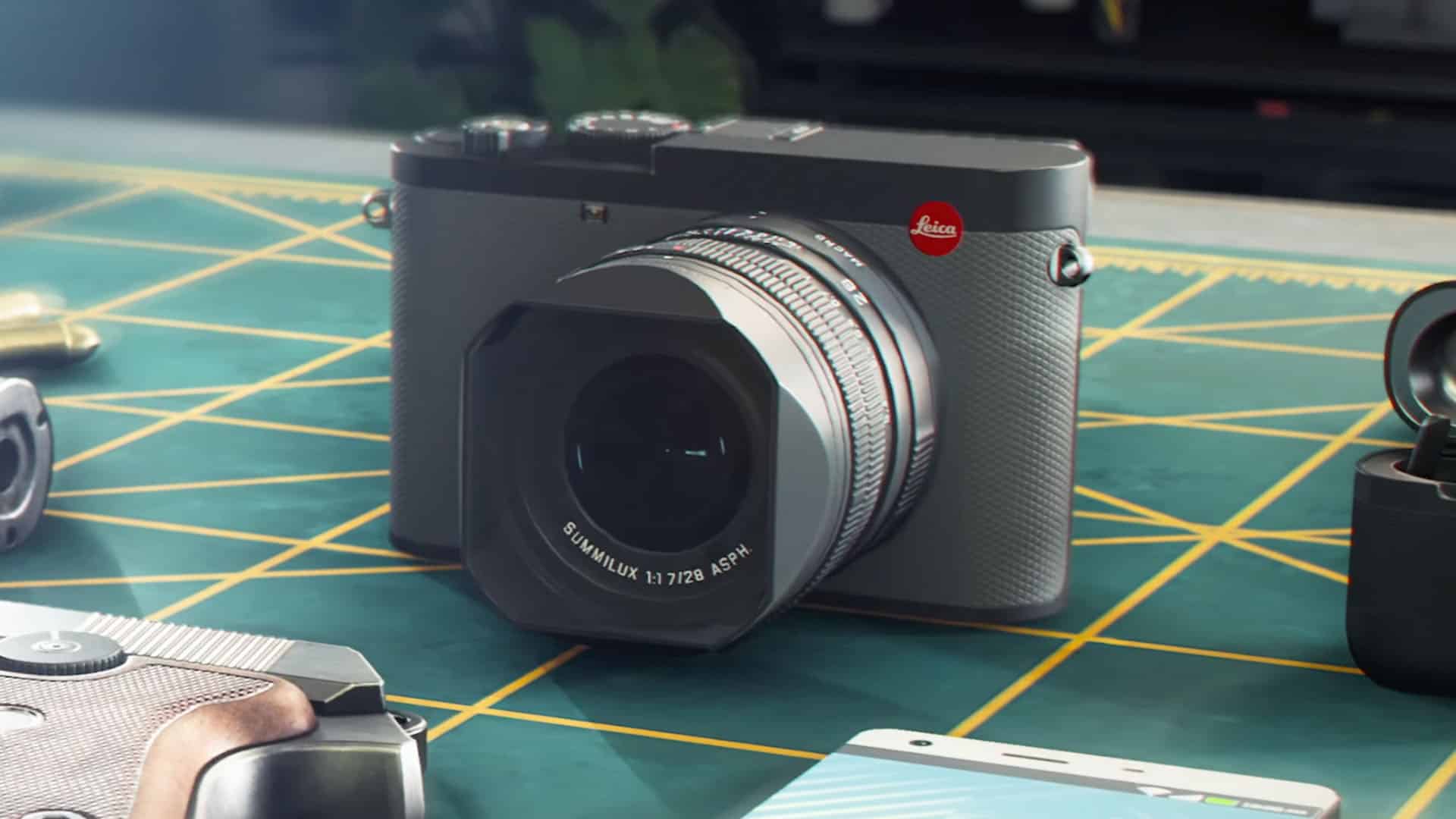
Instead of a smartphone, Leica’s presence in 007 First Light takes a different turn — one that feels like it could have come straight out of Q Branch. What appears here is a camera-based gadget that looks strikingly similar to a Leica Q3.
Leica and James Bond – A Legacy Revisited
Before diving deeper into the in-game device, it’s worth remembering that this isn’t Leica’s first connection to the Bond universe.
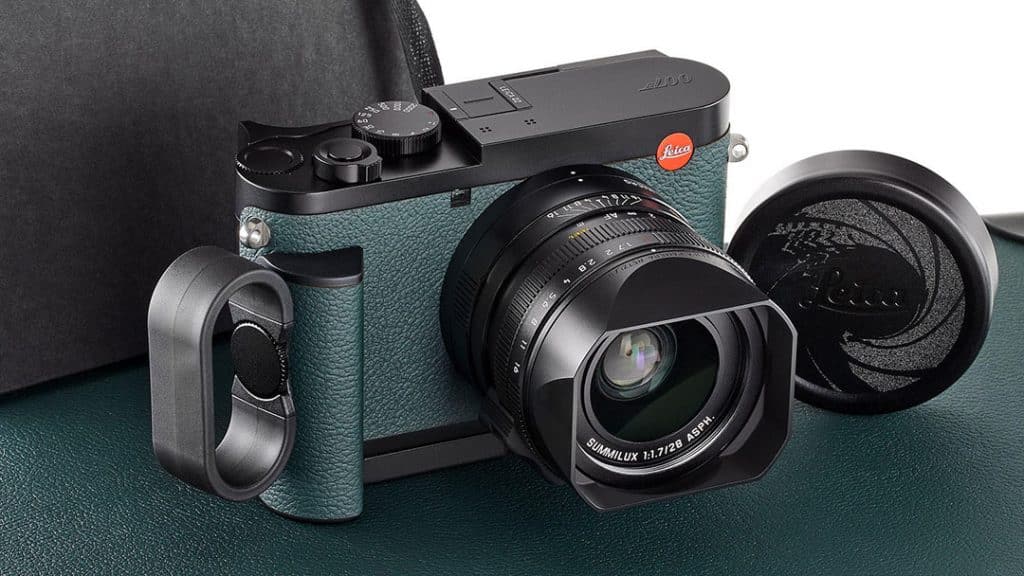
In 2021, alongside the release of No Time to Die, Leica introduced the Q2 “007 Edition” — a limited collector’s model restricted to just 250 pieces worldwide.
Created in collaboration with Globe-Trotter, the camera combined Leica’s minimalist design with subtle Bond references, including the engraved 007 logo and a gun barrel motif on the lens cap. It was paired with a handcrafted Globe-Trotter case in a distinctive Ocean Green finish, inspired by No Time to Die.
Leica cameras were also present on set — including in Q’s London home — quietly embedding the brand within Bond’s world.
Today, the Q2 “007 Edition” has firmly established itself as a collector’s piece, with pre-owned listings reaching around €9,500 and beyond, underlining its status as a rare crossover between photography and Bond memorabilia.
The Leica Q3 – Built for the Field
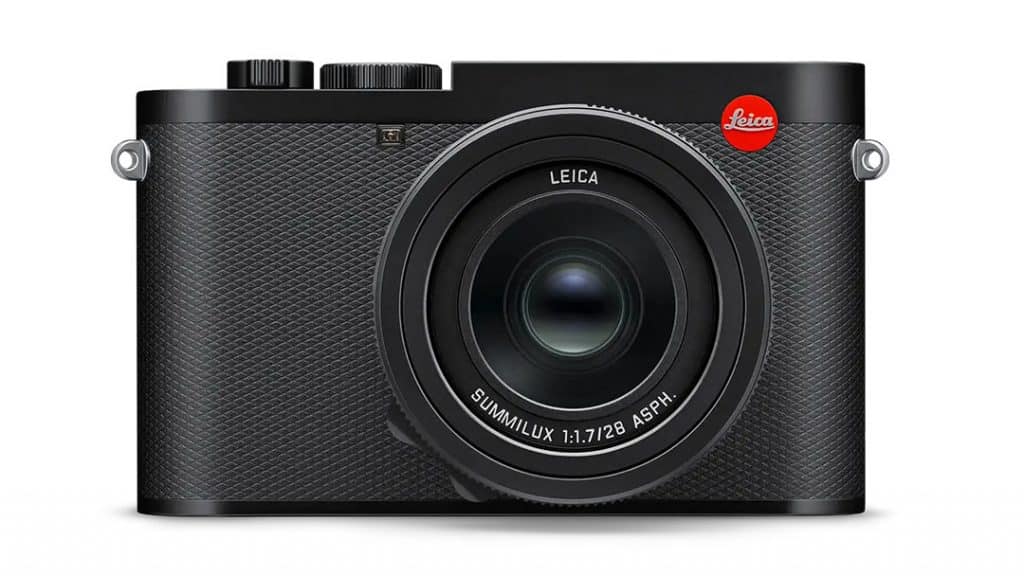
The device seen in 007 First Light strongly suggests a model inspired by the Leica Q3.
Leica’s Q series is aimed at photographers who value immediacy, precision, and a highly controlled shooting experience. Rooted in the brand’s long-standing tradition of German engineering and minimalist design, it appeals to users who prefer a focused, streamlined approach — often in fast-moving, real-world situations such as street photography or reportage.
At its core is a full-frame BSI-CMOS sensor with triple resolution technology (60MP / 36MP / 18MP), paired with a fixed 28mm f/1.7 Summilux ASPH lens with an integrated macro mode, which also appears to match the version shown in-game, rather than one of the alternative focal length variants.
Additional features include:
- a hybrid autofocus system using phase detection, contrast AF, depth-from-defocus, and AI
- a tilting 3-inch display and 5.67MP OLED viewfinder
- IP52-rated protection against dust and moisture
In the real world, that level of engineering comes at a price: the Leica Q3 sits firmly in the premium segment, typically starting at around €6,500 depending on configuration and availability.
On paper, this is a camera built for speed, precision, and reliability under pressure. And that’s exactly where the parallel to Bond becomes clear. A fixed 28mm lens removes complexity, while the wide field of view keeps the entire environment visible. The system is fast, direct, and always ready — no setup, no hesitation.
Which leads directly to how the device is used in-game.
Shockwave Camera – Happy Little Accidents
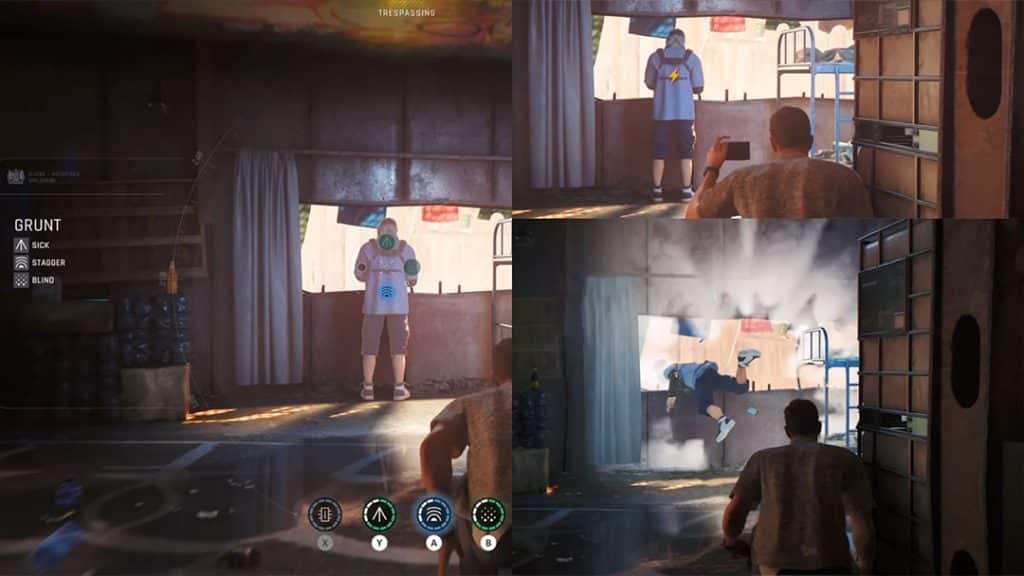
In 007 First Light, the device doesn’t function as a conventional camera but instead acts as a Shockwave Camera, emitting a controlled pressure wave that can briefly “stagger” enemies — disrupting their stance and opening a window for follow-up actions.
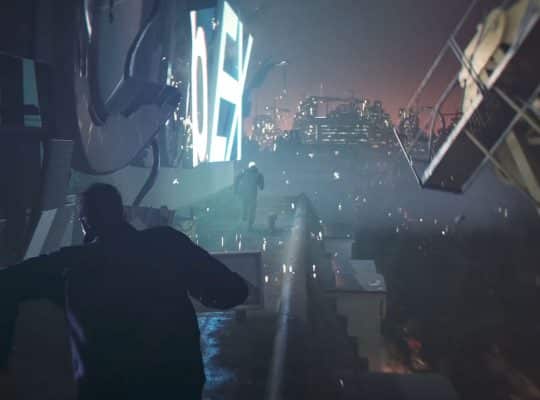
One moment in the trailer appears to take place in Aleph, where Bond moves stealthily through a building. A guard stands near the edge of a balcony, unaware of his presence. Rather than engaging directly, Bond triggers the device. A brief flash accompanies the activation, followed by a sharp, contained blast. At the same time, a transparent, circular ripple moves through the air — pushing the guard off balance and over the railing. The interaction remains indirect, letting the environment do the work rather than relying on direct force.
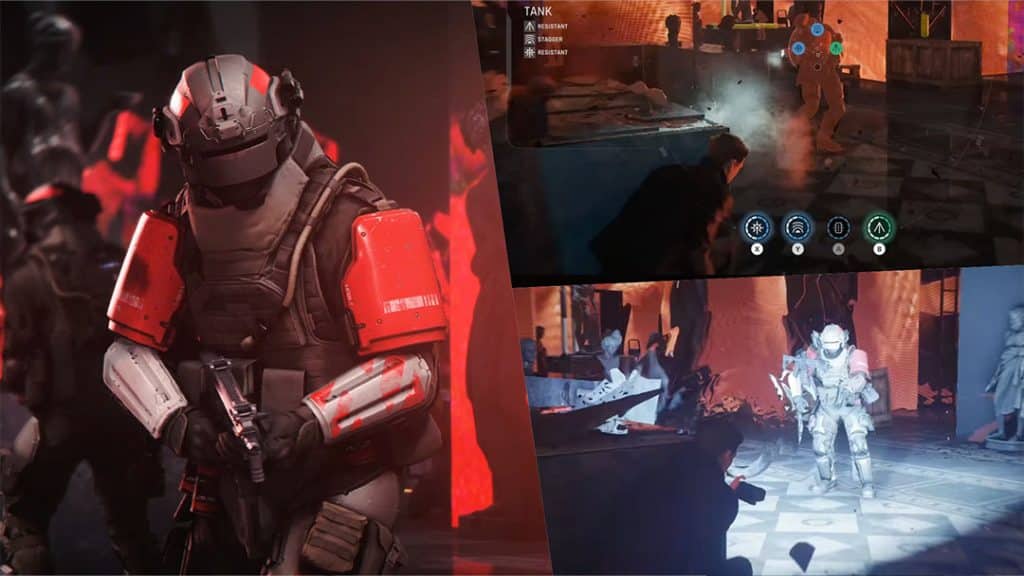
The Webb Industries gala in Kensington, London, could have been a pleasant evening. But as we already know, things escalate toward the end, and Bond is granted his license to kill in order to fight off a large number of enemies.
Bond then encounters a heavily armored opponent, and at first glance, the odds seem stacked against him. The Q Lens interface on the left side of the screen already marks the enemy as resistant to hacking and the Dartphone, suggesting that those options won’t be effective. It’s here that the Shockwave Camera becomes the right tool for the situation.
When the Shockwave Camera is triggered, the same combination of flash and pressure wave is visible. The enemy is forced backward, his stance broken and his weapon knocked away. At the same time, debris from the environment — remnants of the preceding firefight — is caught in the blast and thrown around him, amplifying the disruption.
In practice, this turns the gadget into a tool for positioning rather than elimination. Rather than dealing direct damage, it creates a short window of vulnerability that Bond can exploit to regain control of the encounter.
Energy, Limits, and Photo Mode
While the Shockwave Camera is highly versatile, its use is tied to an energy system. Each activation consumes power, which must be replenished by collecting batteries throughout the levels.
Interestingly, the trailer does not reflect these limitations. Across all showcased gadgets, energy consumption appears absent, suggesting the system is still being balanced or was relaxed for demonstration purposes.
It also remains unclear how broadly the device can be applied. While its use against enemies is evident, an open question is whether objects in the environment can be actively manipulated — for example, using debris to block paths, distract guards, or influence encounters indirectly.
Leica’s presence introduces another intriguing angle. With a device that visually and conceptually mirrors a real-world camera, a dedicated photo mode would feel like a natural extension — although nothing of that sort has been announced so far. The more interesting question is how deeply the company could be involved, whether in the visual look, interface design, or the overall shooting experience within the game.
What is already clear is the intent behind the design. The Shockwave Camera is not a traditional weapon, but a means of control — effective both in the chaos of combat and in more carefully prepared situations, where the environment itself becomes the primary tool..
That duality feels familiar. Not unlike Hitman, success may lie in those small, well-placed “accidents” — whether improvised in the moment or set up with precision.
Sources:
YouTube.com – 007 First Light – Rules of Spycraft
Classic,Leica-Gamera.com – Leica Q2 “JB-007”, Vers. E, U, JP