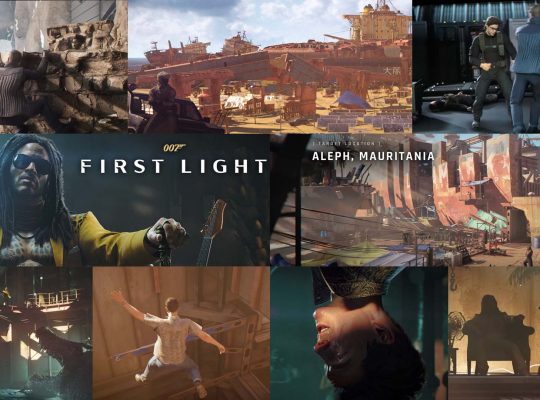
The opening titles of 007 First Light stand proudly on their own—an original, fresh take that still feels unmistakably Bond. IO Interactive has crafted a sequence full of its own bold identity, yet it also pays homage to classic franchise motifs. These are not just references—they are cleverly reimagined, making familiar themes feel new.
If you’ve followed us for a while and read our coverage, you probably spotted many of these details. And if not, there’s a treasure trove waiting for you. Look closely—you’ll enjoy discovering what you may have missed.
What’s especially impressive is how IOI balances this creativity with intentional restraint. While we see some known locations, this is no limitation—it’s a promise. Unlike a Bond film teasing two hours, 007 First Light will unfold over many. By keeping big surprises hidden, the titles protect the scale of the adventure.
In short, these titles don’t just look fantastic—they invite you to explore, and they hint that there’s so much more beneath the surface. Let’s dive in together!
The Explosion Over Iceland
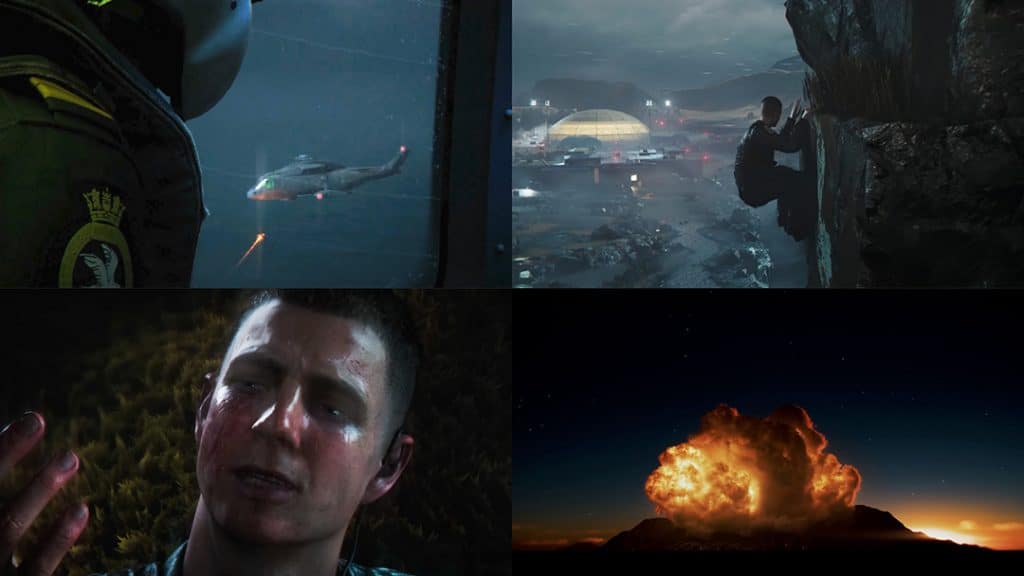
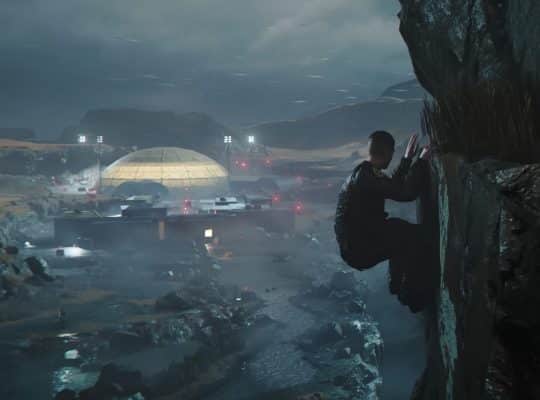
The title sequence opens with a massive explosion on a remote island at night. Immediately afterwards, the camera tilts upward toward the Northern Lights. The contrast between the violent destruction on the island and the almost mystical calm of the aurora above creates a striking visual moment right at the beginning of the sequence.
Right away, this supports the theory that Iceland is not only the playable prologue of the game, but also the narrative segment that directly precedes the opening titles. In that sense, Iceland would essentially function as the game’s equivalent of the classic Bond film pre-title action sequence — a long introductory mission that sets the stage before the title sequence begins.
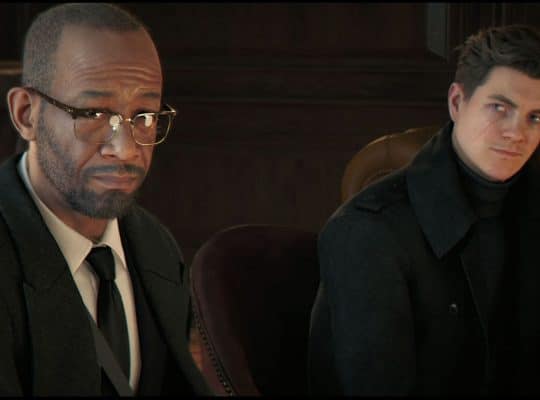
From the Story Trailer we already know that Bond is operating in Iceland at night when an unknown party launches an attack. At this point in the story, he is still serving as a Lieutenant in the Royal Navy, before his recruitment into MI6.
The sequence of events seems to begin with Bond’s helicopter being shot down. The crash apparently kills the rest of the crew, leaving Bond possibly as the only survivor. According to Greenway later in the story, he survives the incident only by “sheer luck.”
The crash also appears to be the moment where Bond receives the distinctive scar on his right cheek. In the Story Trailer, the wound can briefly be seen still fresh and bleeding after the helicopter incident — suggesting that this is the event that gives Bond the facial scar he is known for in Ian Fleming’s novels.
After surviving the crash, Bond appears to remain on the island rather than escaping immediately. Trailers suggest that he eventually discovers a massive complex hidden in the landscape and at some point even rescues hostages during the mission.
What exactly happens at the facility itself remains unclear. A laboratory or base may be seized by the attackers, defended against the Royal Navy, or destroyed altogether. The explosion that opens the title sequence could therefore represent the catastrophic end of that mission — the moment that sends Bond’s life in a completely new direction.
The Rising Sun – A Metaphor for a New Beginning
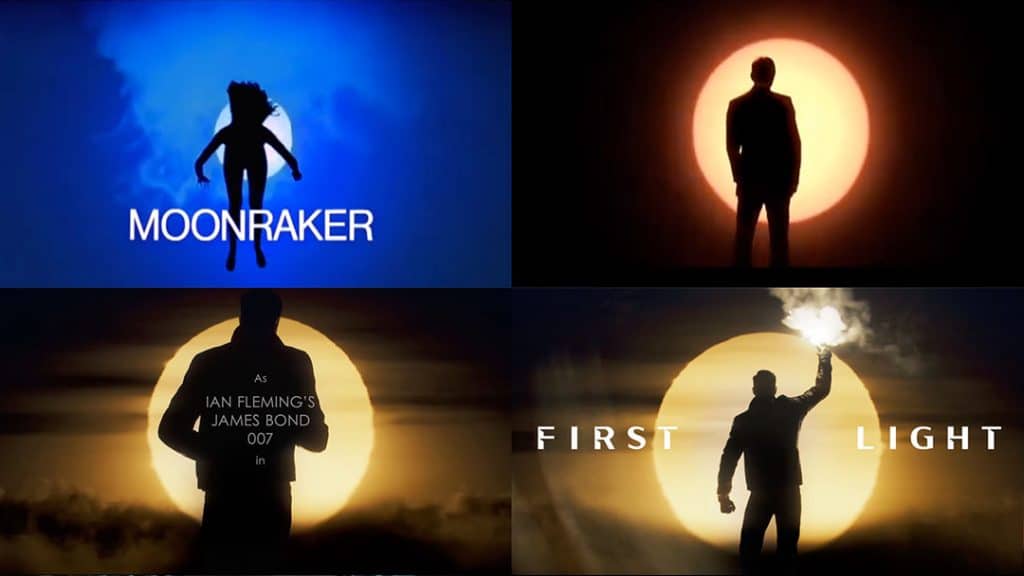
The next image may feel strangely familiar to longtime Bond fans. Bond stands in front of a large glowing disc, which recalls earlier title sequences that used celestial bodies as visual backdrops. In Quantum of Solace, Daniel Craig’s silhouette moves across the desert in front of a blazing sun, while Moonraker famously showed female silhouettes dancing and moving in front of the moon.
In 007 First Light, Bond also stands before a glowing disc — the rising sun.
That fits perfectly with Lana Del Rey’s lyric, “It’s the first light of the day when you wake.”
The sunrise works as a powerful metaphor. For Bond, it represents hope and a new beginning. After the tragedy on Iceland, where he appears to lose members of his team, his life takes a completely different direction. Eventually, it leads him to MI6 and a new career as a spy.
But the next line immediately raises doubt: “Is it real or is it fake?” Is this truly a hopeful new beginning for Bond, or just the illusion of one?
Bond then lights a flare, and that gesture can be read in several ways. On a literal level, he may simply be signalling for rescue after surviving the events in Iceland. On a more symbolic level, the moment reflects Bond’s personal situation: he is alone, disoriented and searching for direction. Soon, the people at MI6 — figures who are known to play an important and formative role in his life — will take him in and shape his future.
And there is yet another interpretation. By lighting the flare, Bond himself becomes a source of light. He brings light into darkness, illuminates what is hidden, recognizes things more clearly for himself and for others, and changes the world around him. In that sense, Bond becomes an agent of change.
Shadows and Silhouettes – Echoes of Classic Bond Titles
The visual perspective then shifts.
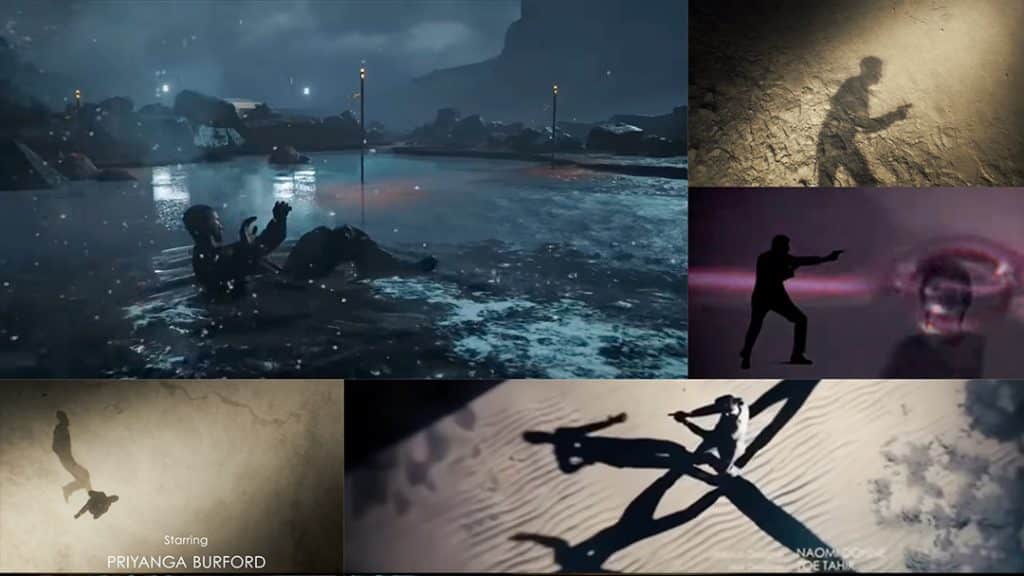
At first, Bond appears to be standing on what looks like the beach of Iceland, which would make sense in the context of the mission. Given the size of the explosion at the centre of the island, the edge would offer the best chance of survival, and open spaces such as a beach would make him easier to spot in a rescue operation.
The cover of Game Informer also showed Bond standing on a beach in Iceland — likewise on the shoreline, though in daylight. Of course, the image is only a cover illustration and not meant as a literal retelling of the events.
In the title sequence, Bond is first seen holding the flare. In the very next moment, he appears only as a sideways silhouette with his pistol. This feels like a stylistic nod to the classic title sequences by Maurice Binder, which often relied heavily on shadows and silhouettes of the iconic Bond actors.
At the same time, the moment strongly recalls the opening of Skyfall, where Craig also appears on sandy ground and confronts shadowy figures. In 007 First Light, however, the shadow follows Bond rather than opposing him directly, and that opens up additional symbolism.
Shadows are often associated with dark secrets, but they are also only the image of something rather than the original itself. The shot even reminds me of the famous poster for Star Wars: Episode I, where young Anakin Skywalker stands before a wall while his shadow already takes on the shape of Darth Vader.
Something very similar may be happening here. We see the young Bond, the man whose early story this game is about, while his shadow already carries the more traditional 007 silhouette.
The Temple and the Watchful Women
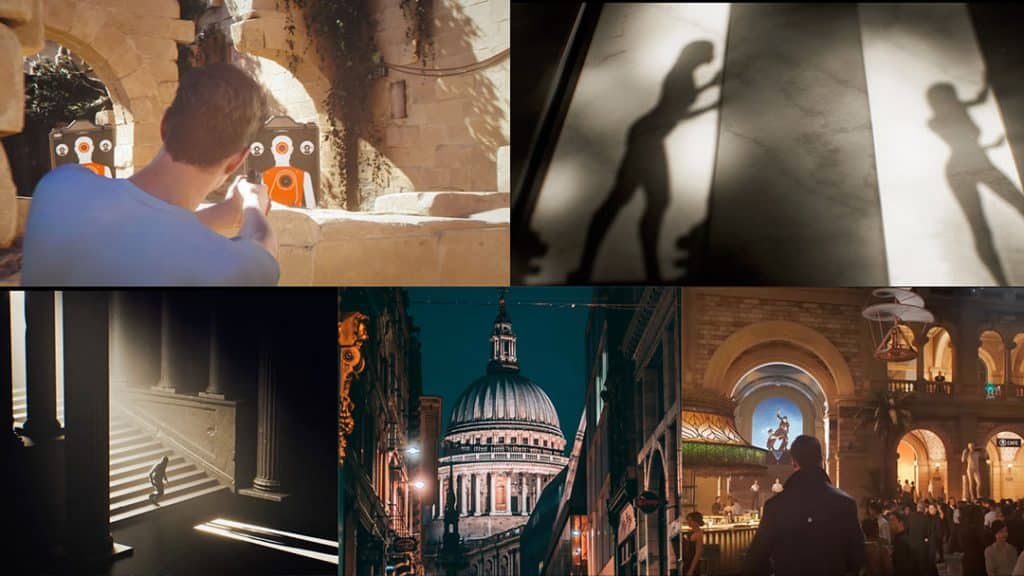
The next scene is particularly intriguing. Bond approaches an ancient building with Corinthian columns, giving the moment an almost temple-like atmosphere.
If the title sequence roughly follows the progression of the game, this could hint at the MI6 training camp on Malta, which Bond visits early in the story. The shooting range there is also located among ruins, even if the architectural style does not entirely match.
London would be another possibility. The classical architecture with its columns resembles many of the grand neoclassical buildings found across the city, which could make the structure a symbolic stand-in for MI6 itself — or perhaps for locations such as the Webb Industries gala in Kensington.
Interestingly, this reading also fits with comments from 007 First Light Art Director Rasmus Poulsen in our interview during Gamescom. When asked about the ancient motifs appearing in the game, he explained that the environments intentionally span different historical layers:
“It is important to visit vast and wide aesthetically speaking and that there is both modernity and something old, as well… Again, about timelessness – it’s important to get a sense of dynasties throughout time. And of course – what is MI6 about? It’s about protecting and fighting for king and country, right?”
If the game explores these overlapping layers of time, a temple-like ruin could easily serve as a visual shorthand for the long institutional tradition that MI6 represents.
Another detail matters just as much as the architecture: for the first time in the sequence, female figures appear.
Two women can be seen emerging cautiously from behind the columns, their silhouettes separating from the shadows of the pillars as they step into the light. Bond does not appear to notice them at all. Interestingly, they look remarkably similar — almost as if they were the same figure repeated, or at least members of the same kind.
Rather than interacting with Bond directly, they simply watch him from a short distance, as if quietly assessing him. The scene carries a subtle predatory undertone: they do not yet pose an open threat, but the way they study him recalls the behavior of predators observing potential prey.
At this point the lyrics add another interesting layer. Bond’s youth is framed almost as a strength — something he needs to use to his advantage. He is not yet jaded. Unlike more seasoned operatives, he still possesses qualities that can be useful precisely because they are not yet worn down by experience: strong instincts, impulsiveness, creativity, perhaps even a willingness to take risks that others would reject.
At the same time, that youth may also imply a certain naivety or trustfulness that could leave him vulnerable. Bond is still learning how to navigate the world around him — including his encounters with women. A certain openness, curiosity or even a slightly unpolished way of dealing with the opposite sex might make him more susceptible to manipulation, which in turn could make him particularly exposed to these mysterious female figures watching him from the shadows.
Then the lyrics continue with “follow the music play”, almost as if Bond is being told to go along with events for now and let himself be carried forward.
But the visual tells a darker story. As Bond walks down the steps, the door behind him slowly closes and the sunlight around him disappears, almost as if he is unknowingly walking into a trap — or perhaps descending into secrets hidden deep within MI6 itself. After all, 009 was once part of the organization before switching sides, and from what we know so far, a larger conspiracy appears to be at the heart of the story.
The Exploding Chess Pieces
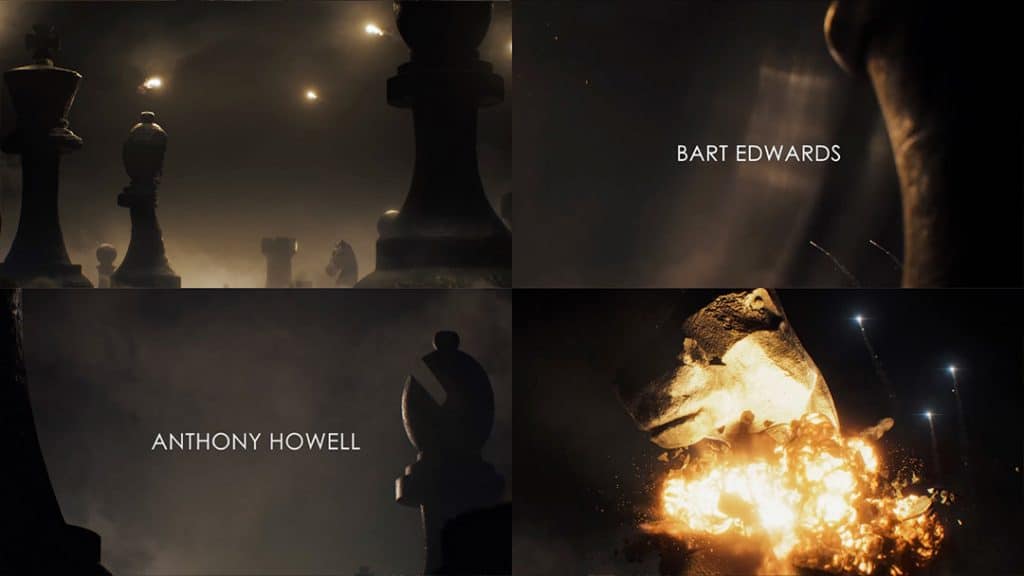
One of the things that has always made the most memorable Bond title sequences work so well is their ability to combine two seemingly unrelated ideas into one striking visual image. When that contrast lands perfectly, the result often becomes one of those iconic Bond moments that stays with the audience long after the sequence has ended.
This is exactly where the developers at IO Interactive deserve real credit, because the chess scene in the 007 First Light opening titles works brilliantly on that level.
Small chess pieces suddenly appear like monumental structures in the night, towering over Bond like giant statues. And while chess is traditionally the quiet duel of two minds — a battle of strategy and calculation — the sequence turns it into something far more violent. Instead of careful moves across a board, the pieces are blasted apart by rocket impacts, as if an intellectual contest had suddenly escalated into real warfare.
Visually, it is one of the most striking images in the entire title sequence — and quite possibly the strongest single shot in the whole video.
What makes the scene even more impressive, however, is that the idea of “the game” unfolds on several levels at once.
One final detail adds an intriguing layer to all of this: the opening titles also mark the first time two previously unannounced actor names appear — Bart Edwards and Anthony Howell. Since neither had been officially linked to a role before, this has sparked the theory that they may portray the game’s central antagonist and 009 — a possibility explored in more detail in our separate article.
The Game as a Literal Chess Match
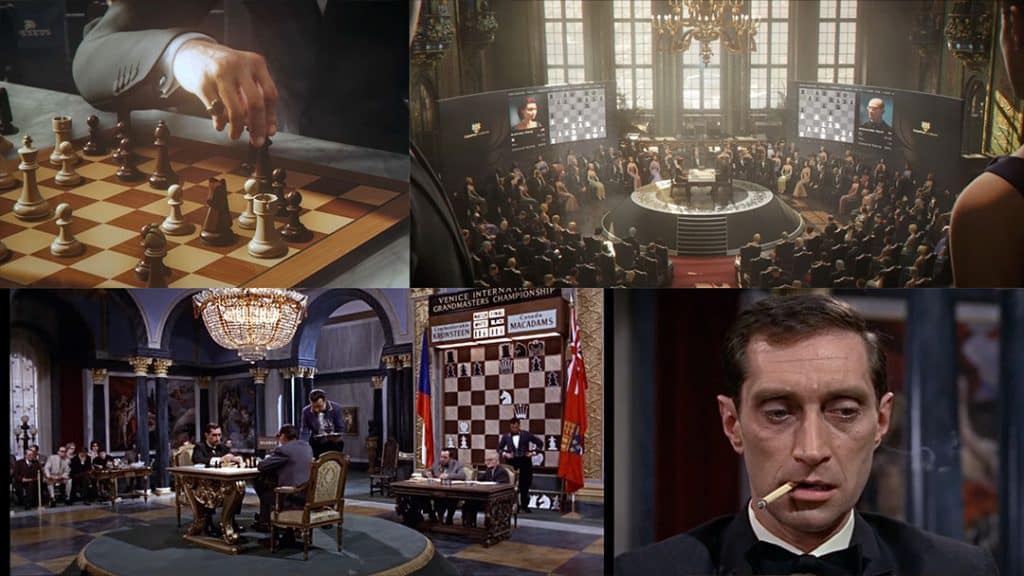
On the most obvious level, the game is quite literal. In 007 First Light, the Grand Carpathian Hotel in Slovakia hosts an international chess tournament. The setting immediately reminded many Bond fans of From Russia with Love, where SPECTRE strategist Kronsteen calmly guides the pieces toward victory.
The imagery therefore connects directly to the location itself. The chessboard becomes a visual shorthand for the intellectual duel unfolding inside the hotel.
The Game as a Strategic Conflict
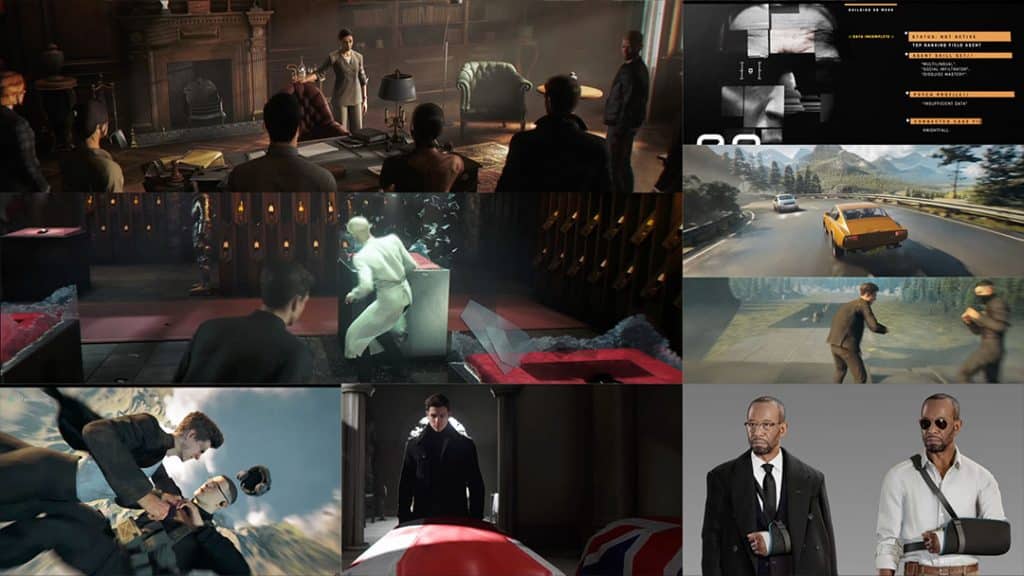
But the chessboard also reflects the larger strategic conflict unfolding in the story.
For MI6, the operation in Slovakia is essentially a campaign against their former agent 009, who has switched sides and now plays for the opposing camp. In the reveal trailer, M even frames the mission in exactly those terms, stating that she wants “all her pieces on the board” for this crucial operation.
The threat posed by 009 is also emphasized by John Greenway, Bond’s later MI6 mentor. In the announcement trailer, he describes the rogue agent as a “master manipulator” and warns that whatever the endgame may be, “we won’t see it coming.”
In hindsight, the line almost sounds like a dark prophecy. From the game’s synopsis, trailers and developer diaries, it already appears that something catastrophic unfolds at the Grand Carpathian Hotel. The incident may even explain why Greenway is later seen with a severely injured arm, and why several MI6 recruits seem to lose their lives during the operation.
Seen from that perspective, the violent destruction of the chess pieces takes on an additional meaning. The exploding figures may not only represent the clash between two opposing sides, but also the damage inflicted on MI6 itself — a strategic game that suddenly turns into a devastating battlefield.
The Game as Bond’s Transformation
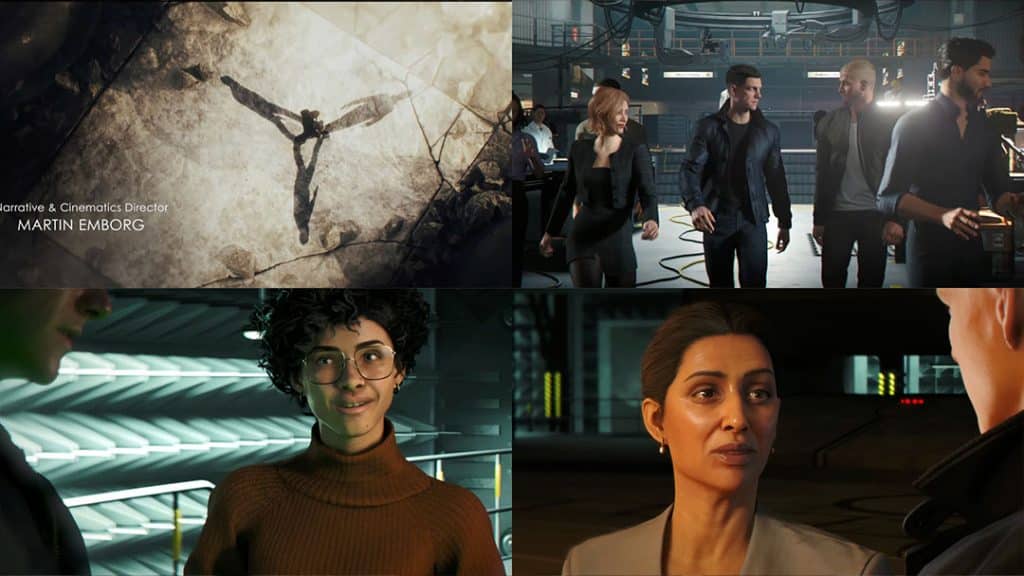
There is also a third level — the one that concerns Bond himself.
As the young recruit moves between the shattered chess pieces, illuminated from several directions, he suddenly casts multiple shadows at once, almost as if new facets of his character were beginning to emerge.
The lyrics reinforce this idea in a striking way. Earlier in the song we hear the line:
“Promise you will never change,”
followed by the echoing refrain:
“change, change, change.”
In the context of the story, that promise almost sounds like a question: can Bond remain true to himself as the game around him grows more complex — especially in a world where agents like 009 have already switched sides? It might also be read as a quiet reminder that he should not lose the strengths of his youth along the way — a certain optimism, an openness toward others, and the ability to form genuine emotional connections — even as the realities of espionage begin to reshape him.
At the same time, the repeated “change, change, change” can also be read differently. Rather than warning Bond that he might change, it almost sounds like an encouragement — a call for change.
Bond is still young, impulsive and less shaped by the rigid structures of intelligence work. That very quality might allow him to challenge the system around him and even change the culture of MI6 itself — and it may well be exactly this aspect that M ultimately views as a strength, reinforcing her decision to revive the 00 program in the first place.
A Game Played with Real Lives
The song then introduces the element of risk:
“People try and stop you, all the fates just watch you
Dying just to know whether you’ll play your life like a game.”
The line captures the essence of Bond’s world. Being a spy means constantly risking your life, moving through a game where every move carries consequences. And just like in chess, playing the game inevitably changes the player as well.
In other words, Bond is not just observing the board — he is now one of the pieces being moved across it.
But perhaps he is not the only one playing.
The lyrics already hint at unseen observers: “all the fates just watch you.” And moments later, the sequence reveals exactly that.
The Women with the Glowing Eyes
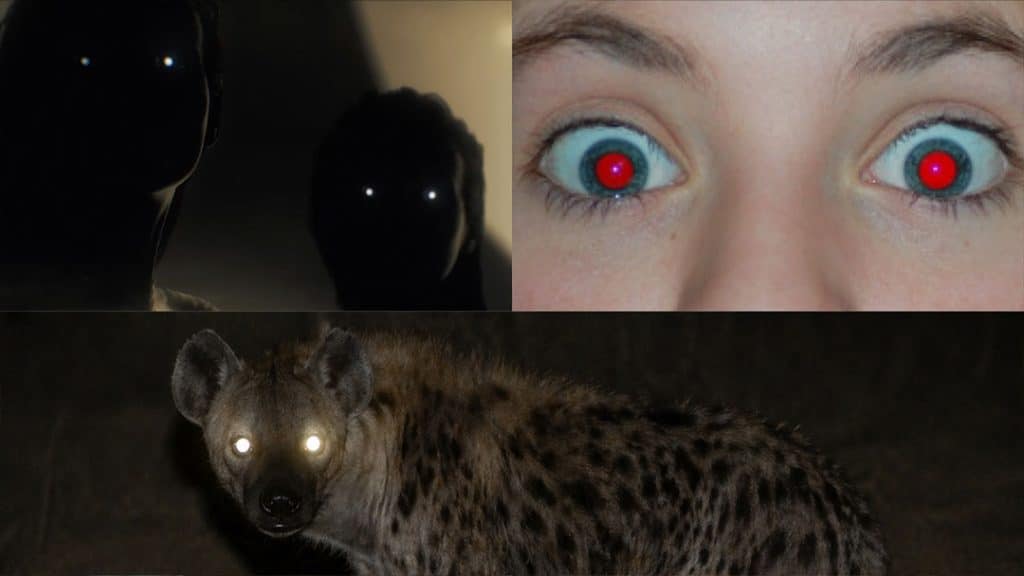
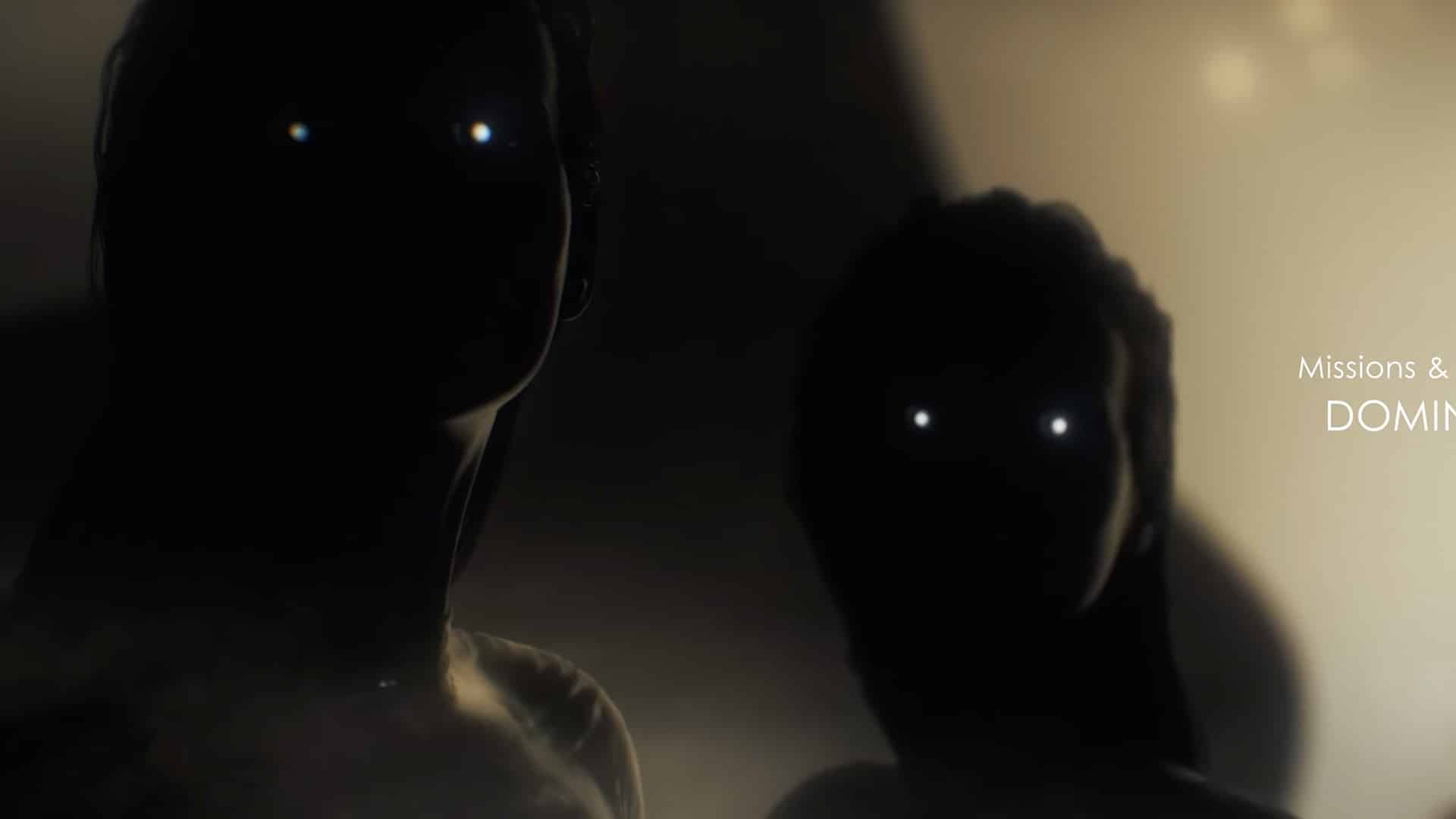
To the line “All the fates just watch you”, two women suddenly look directly into the camera.
What immediately stands out are their eyes.
They glow with a stark white light, creating an effect that feels subtly unsettling. Human eyes can glow red in photographs when a flash reflects off the blood-rich retina at the back of the eye, producing the familiar red-eye effect.
Some animals, especially predators, possess an additional reflective layer known as the tapetum lucidum. This structure reflects light back through the eye and improves night vision. In flash photography, it can cause the eyes to shine with a pale, almost white glow.
The women in the title sequence evoke something similar. At first glance, their glowing eyes give them an almost predatory quality — as if they were creatures that see clearly in the dark.
At the same time, the scene itself points in a slightly different direction. The lyrics speak of forces that “watch you,” and that is exactly what these figures do. They do not attack Bond or interact with him directly. Instead, they observe him from a distance, emerging from behind the columns as if silently assessing him.
A Different Kind of Bond Women
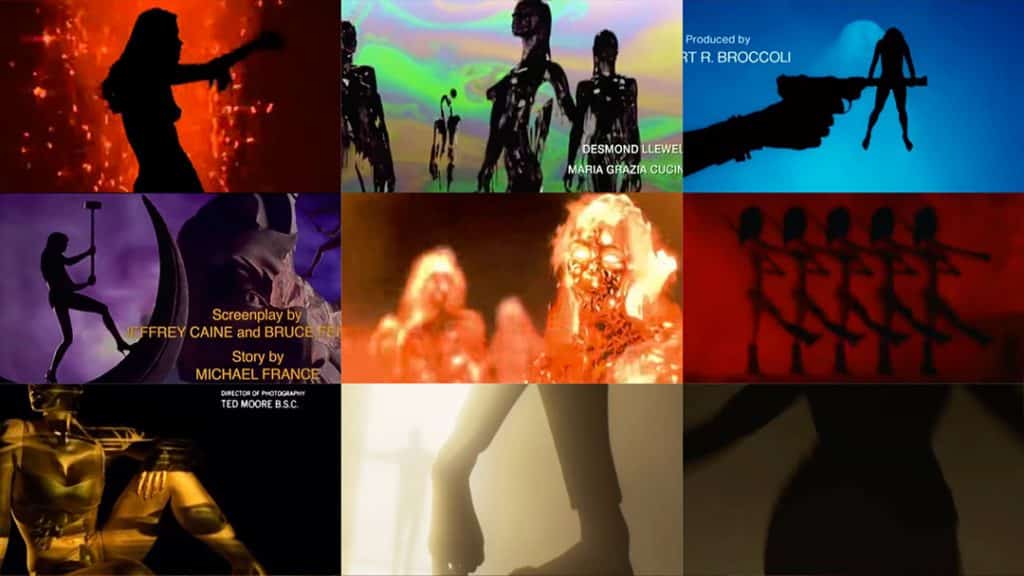
Before considering their possible identities, it is also worth noting how differently these women are presented compared to earlier Bond title sequences.
In many classic Bond openings, women were often highly sexualized. They frequently appeared with large areas of exposed skin, with the female body strongly emphasized through curves and choreography. The camera often used close-ups or stylized body shots to accentuate those shapes, while the choreography placed the figures in highly dynamic poses — jumping on trampolines, diving through water, climbing or hanging from oversized pistols.
They were often also equipped with props that reinforced the playful spectacle of the sequence: pistols in their hands, skis, parachutes, even military-style caps or uniforms. They interacted with the visuals almost like performers inside a stylized spy fantasy.
In 007 First Light, the figures are portrayed very differently. In some camera angles it becomes possible to distinguish elements of clothing. Subtle details such as folds of fabric around the hips or what appears to be the end of a trouser leg suggest that the figures are not presented as completely nude silhouettes.
Without the overt sensuality that characterized many earlier Bond title sequences, the women feel less like stylized Bond girls and more like silent presences surrounding Bond.
Interestingly, women in Bond openings have occasionally been stylized in almost inhuman ways before. In The World Is Not Enough, female silhouettes appear as erupting oil fountains, and in Die Another Day they briefly resemble glowing magma-like figures with illuminated eyes. In those cases, however, the imagery mainly served the broader visual theme of the sequence rather than defining the characters themselves.
In 007 First Light, by contrast, the unsettling quality of the figures seems much more central to their presence. Combined with the glowing eyes and the distant, watchful staging, the effect becomes subtly disturbing — as if we were looking at figures who appear human, yet remain strangely unreadable.
Who Are These Women?
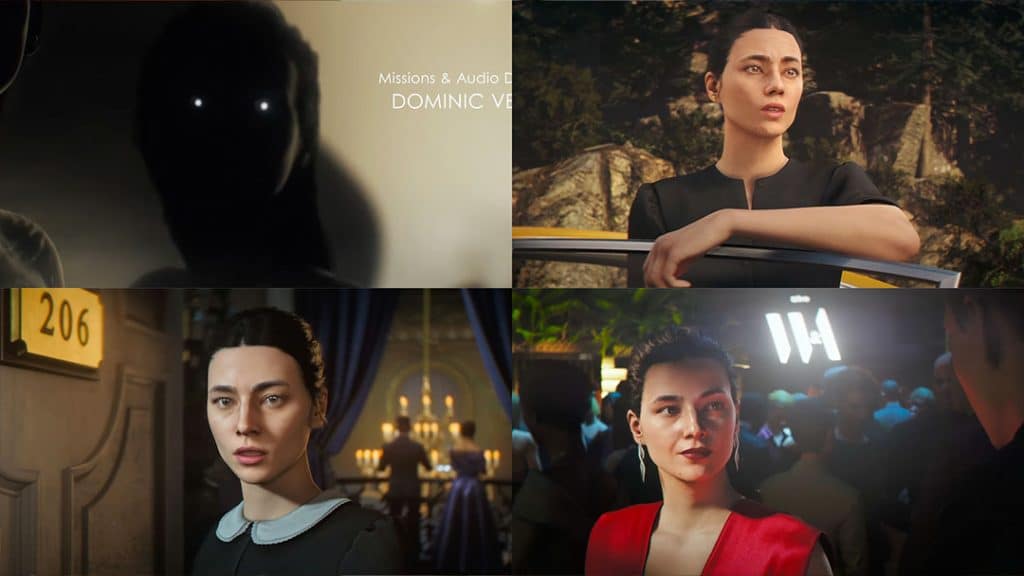
This raises an obvious question: who are these women?
One possible answer is DGSE agent Charlotte Roth, a character we encounter relatively early in the story. Roth first meets Bond at the Grand Carpathian Hotel in Slovakia — the same location associated with the chess tournament imagery in the title sequence.
We already know that Roth pursues ambitions of her own. In the game’s reveal trailer — where she appears more frequently than any other female character — she repeatedly appears on screen while M delivers the line: “She is not your friend, Bond. She is an asset.” The trailer never explicitly confirms that the line refers to Roth, but the editing strongly invites that interpretation.
Bond, however, seems willing to ignore such warnings and becomes involved with at least one of these women.
The Unknown Woman in Vietnam
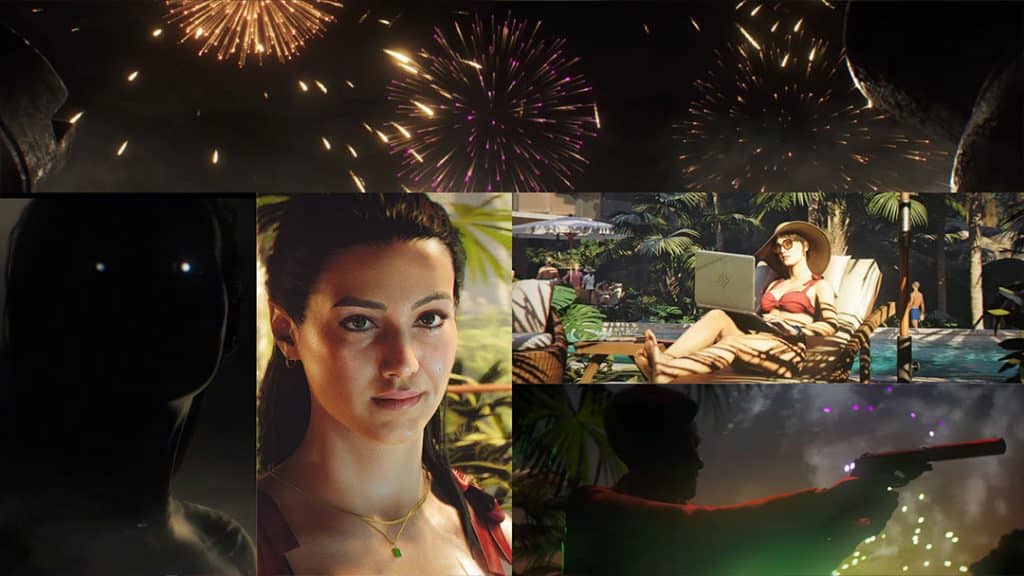
The second figure may point to another character whose identity is far less clear.
In the reveal trailer, this woman appears sitting by a pool with a laptop. In the Story Trailer, she is later seen standing by a pool and speaking with Bond in what appears to be a resort somewhere in Hạ Long Bay, Vietnam — a location that our earlier analysis suggested could host the entire resort complex.IO Interactive has so far provided no background information about this character.
Interestingly, the reveal trailer also shows Bond fighting several enemies at night on the beach of what appears to be the same bay, dressed in a tuxedo while fireworks rise into the sky above them. The same fireworks motif appears above the chess pieces in the title sequence. It almost feels as if two moments from different points in the story — the strategic game represented by the chessboard and the later physical confrontation on the beach — are visually layered within the same image.
One detail, however, stands out. In both trailers, the woman consistently wears a necklace with a crystalline pendant.
When viewed closely, the woman on the left in the title sequence also appears to wear a small crystal-like pendant around her neck. The detail is subtle but noticeable enough to suggest that the sequence may reference the same character.
She also has long brown hair similar to Roth’s, which initially led several fans — myself included — to mistake the two women for the same person.
Although IO Interactive has never officially introduced the character, IMDb lists an actress named Raquel Cipriano as portraying someone called Theresa Lorca, whose appearance closely resembles the woman seen in the Vietnam scenes.
If that identification is correct, the two women watching Bond in the title sequence could represent Charlotte Roth and Theresa Lorca.
A Classic Bond Pattern — Reversed?
That possibility also echoes a familiar Bond formula. Many films in the series feature two prominent female characters: one who briefly enters Bond’s life — often as a seduction or a short-lived alliance — and another who remains a more central companion or ally until the end.
If 007 First Light is indeed referencing Roth and Lorca here, the title sequence may be playing with that classic structure. But instead of repeating the trope, it appears to turn it on its head.
Rather than Bond manipulating or seducing these women, the imagery suggests the opposite: they may be watching him, studying him, and perhaps — as a faint echo of the earlier predator imagery — even playing with him the way a hunter toys with its prey.
A Tribute to Dr. No
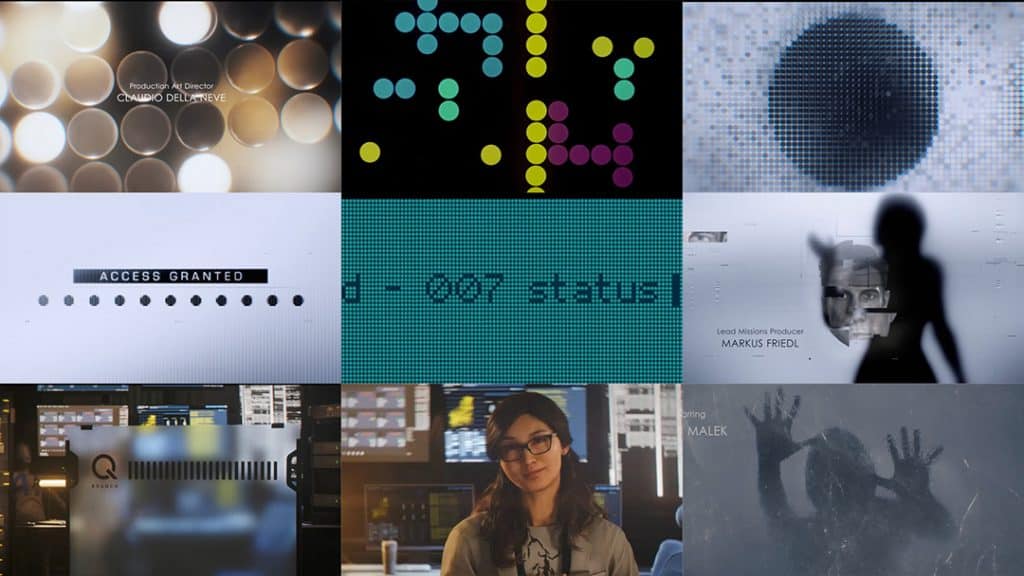
The next scene contains a clever homage to Maurice Binder’s very first Bond title sequence for Dr. No, and at the same time it visualizes the passage of time on two different levels.
Back in Binder’s era, title sequences could not be built on computers. All the visual effects had to be created manually with colored light, filters and physical techniques. The iconic colored dot pattern that looked so modern in the 1960s is now echoed by circles that initially resemble glowing or frosted glass. At the same time, these shapes subtly recall the round white eyes of the women shown moments earlier in the sequence, creating a visual link between the abstract graphic design and the human figures introduced before.
But then those circles shift in appearance and begin to look more like round pixels on a digital display. Light cones and projections have become screen-based effects. In other words, what once had to be done physically is now digital.
And this also mirrors the world of espionage itself. Intelligence work has become more digital, more analytical and more dependent on systems, access points and controlled information.
We see something like a screen or white wall on which an authentication code must be entered in order to gain access. The moment recalls the “activation” sequence in the opening of Skyfall.
At the same time, what we see here looks less like the MI6 desktop interface from the story trailer — which appeared more black and gold — and more like a translucent laboratory screen.
Unlike some of the earlier female figures in the sequence, this woman does not appear threatening. Her eyes are not glowing, and her role seems more analytical than predatory. Standing behind the frosted surface, she activates and shifts fragments of human figures, gradually assembling Bond’s image piece by piece — almost as if helping to complete the portrait of the man he will become. This could also symbolize how different individuals in Bond’s orbit contribute to shaping his character — each influencing a specific aspect of who he becomes. Q, for instance, may guide him toward refinement, equipping him not just with gadgets but with the tools and demeanor of a true gentleman.
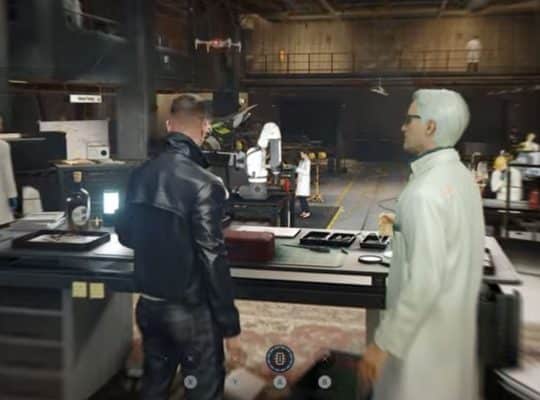
Only afterwards does another connection begin to emerge. In an earlier trailer scene, Dr. Selina Tan, head of MI6’s Tactical Simulations Division, is also seen standing behind a frosted glass screen while setting up her systems. She shares similar physical features, including long brown hair. Within MI6, Tan oversees the Tactical Simulation program — a controlled training environment where agents replay missions, refine their skills, and are evaluated through performance-based scoring systems. While the title sequence never confirms the identity of this woman, the visual parallels raise the possibility that the figure represents Tan — analysing Bond and perhaps even helping to shape his development within MI6’s training program.
As a final visual note, it’s worth mentioning that in the opening sequence of No Time to Die, a figure can briefly be seen like a shadow behind the ice — a small detail that visually recalls this scene from 007 First Light
Bond’s Eye
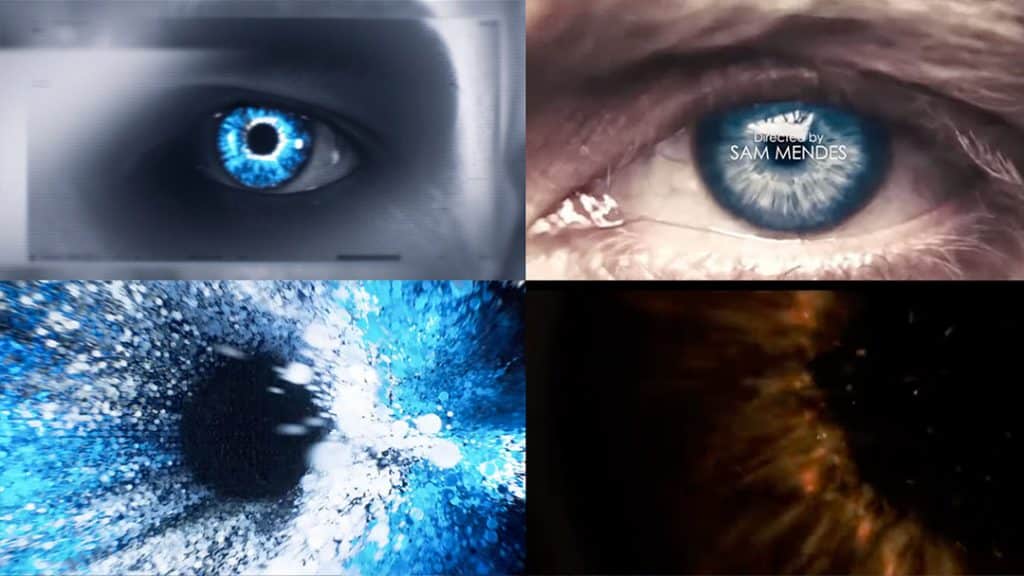
The transition into the next image is triggered by a tight zoom into Bond’s left eye — a visual move that clearly echoes Skyfall.
The blue pixels of his iris sweep across the screen like a snowstorm, with some fragments shifting into darker tones, even hints of purple. As the image begins to break apart, it almost feels as if we are passing through the surface — moving from an external view of Bond into something more internal.
The eye as a classic “window to the soul” fits quite naturally here, especially given the direction 007 First Light seems to take. Bond appears more talkative, more reflective, and we’re given clearer insight into his thoughts than in many previous interpretations. The transition doesn’t just look stylish — it subtly supports that shift in perspective.
A similar distortion of the iris appeared in Die Another Day, though there it dissolved into flames and leaned more into visual spectacle than character insight.
The Club in Aleph
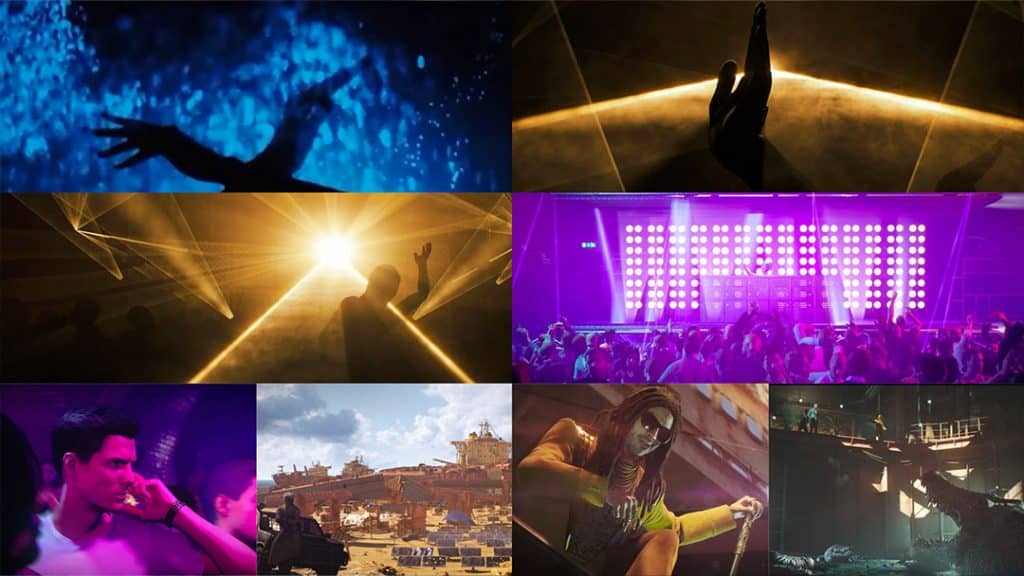
In the next shot we see the familiar woman again, stretching her arms upward and performing the iconic flame- or wave-like movements first seen in Thunderball and repeatedly echoed in later Bond title sequences.
The lights are initially arranged in a highly geometric pattern, almost like a highway leading toward a bright horizon, which subtly returns to the recurring sun motif.
This also aligns with the lyric “Can’t say I am surprised to see you running towards the sun like a moth to a flame.” As in several other moments of the song, light is not only presented as something attractive, but also as something dangerous.
There is, however, another possible reading. We already know of a very sunny place in the game, one seen in earlier trailers and defined by huge solar fields that harness sunlight: Aleph.
And now that we know DJ Dimitri Vegas will perform in a club in Aleph, the scene can be interpreted differently. It may actually represent a nightclub dance floor.
If you look closely, you can even make out the dancing crowd. The silhouettes of multiple people are just barely visible near the lower edges of the frame, emerging from shadow on both sides — and for a brief moment, even square-shaped elements of the club stage become visible in the background,
There may even be a subtle color reference to Aleph hidden in the transition itself. As Bond’s iris rushes through the screen, some of the blue pixels take on a slight purple tone, which matches the lighting in Aleph’s club. It is a clever way of referencing that palette without breaking the otherwise black-and-gold visual language of the opening titles.
Snow, Searchlights and the Dark Mirror
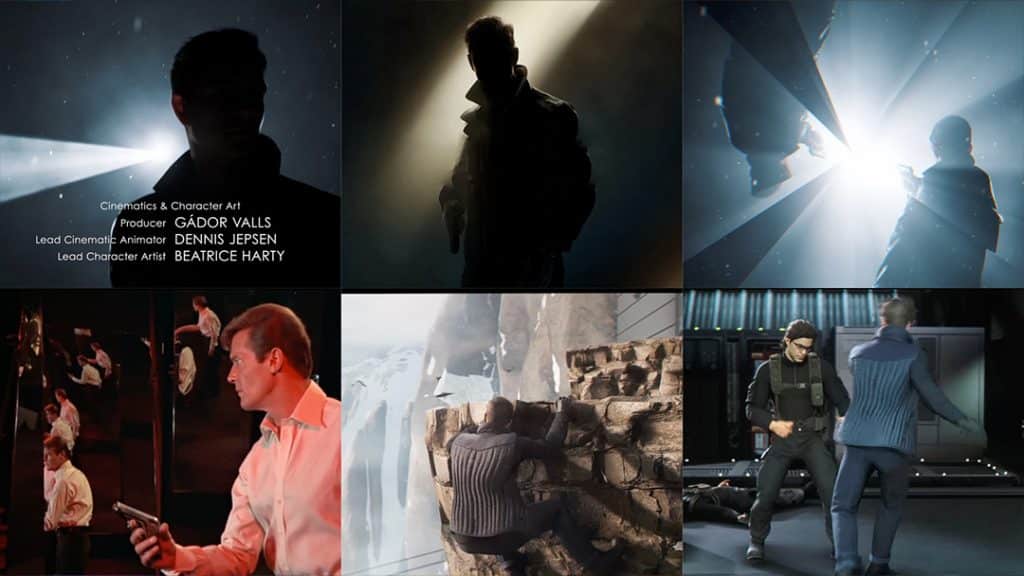
In the following scene, the central light from the club becomes a searchlight into which Bond steps.
White flakes fall from the sky. They could of course be soot after a fire or explosion, but snow seems more likely.
From the Aleph trailer, we already know that Bond is involved in an operation in snowy mountains or at some kind of base. Whether this means a return to Iceland or another snowy country remains unclear, but the visual connection is obvious.
Bond’s silhouette, standing against the harsh backlight of the searchlight, also feels like a subtle visual callback to the reveal week around the PlayStation State of Play the year before — when the game was first teased using little more than Bond’s shadow. It’s a small but elegant way of tying the opening titles back to that initial moment of anticipation.
Bond fires at the light, and at that very moment the image shatters. We then see Bond’s reflection, but in a doubled opposite form: mirrored both horizontally and vertically.
Shots fired at mirrors also appeared in the title sequence of Skyfall, though there Bond still remained clearly recognizable. Another obvious Bond reference is the mirror maze showdown between Bond and Scaramanga.
But the best explanation may actually come from writer Michael Vogt himself. In Beyond the Light – Episode 3, he said:
“A good villain is someone who’s thematically opposed to the main character… Sometimes a great villain is also someone who is a dark mirror… Whose values and ideas are just diametrically opposed.”
That makes this scene feel like a very direct setup for the idea of the villain as Bond’s dark mirror.
The Mask of the Villain
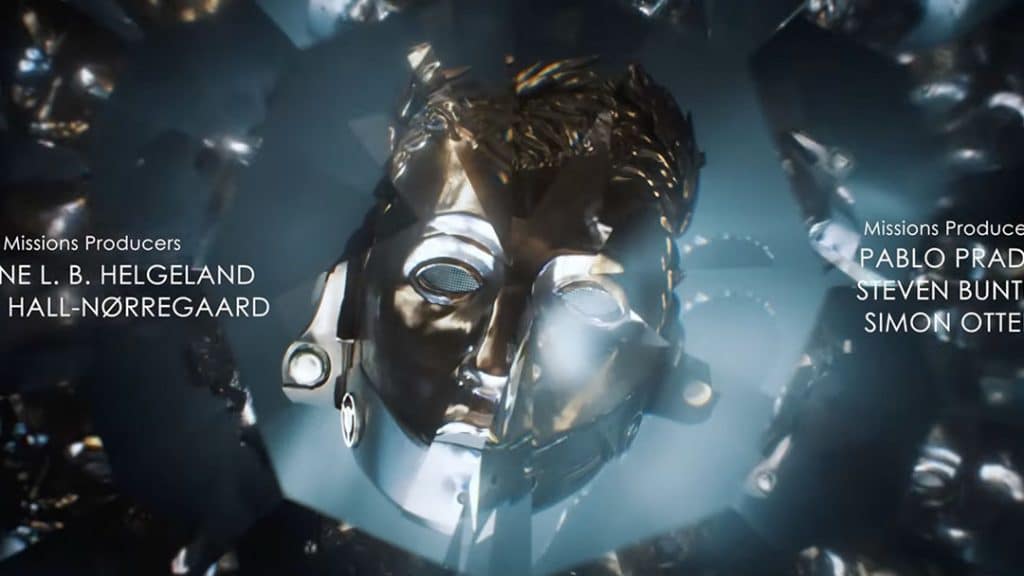
And exactly then, the villain’s mask enters the frame — the same mask we have already seen so often.
This is the person who seems to represent Bond’s dark reflection. Particularly interesting are the ventilation slits in the mask. They suggest some kind of protection, even though the back appears open or at least not fully enclosed.
And once again, we have to talk about the laurel wreath on the mask.
In antiquity, laurel wreaths were worn by victorious generals and by Olympic winners as symbols of triumph and glory. If we keep the dark-mirror idea in mind, that is fascinating. Bond is still at the beginning of his life and career. He has survived painful personal losses, but he is not yet a celebrated success.
The antagonist, by contrast, presents himself as someone who appears already at the top — a figure of status, victory and perhaps even heroism in his own eyes, though with motives entirely different from Bond’s.
I am still not convinced that 009 is the main villain since hefeels more like a right-hand figure. But the mirror motif would still fit. Both are agents, both operate in the same world, but their motives stand in direct opposition. 009 was the best, Bond is the newcomer.
The Kaleidoscope, the Machine and the Chandelier
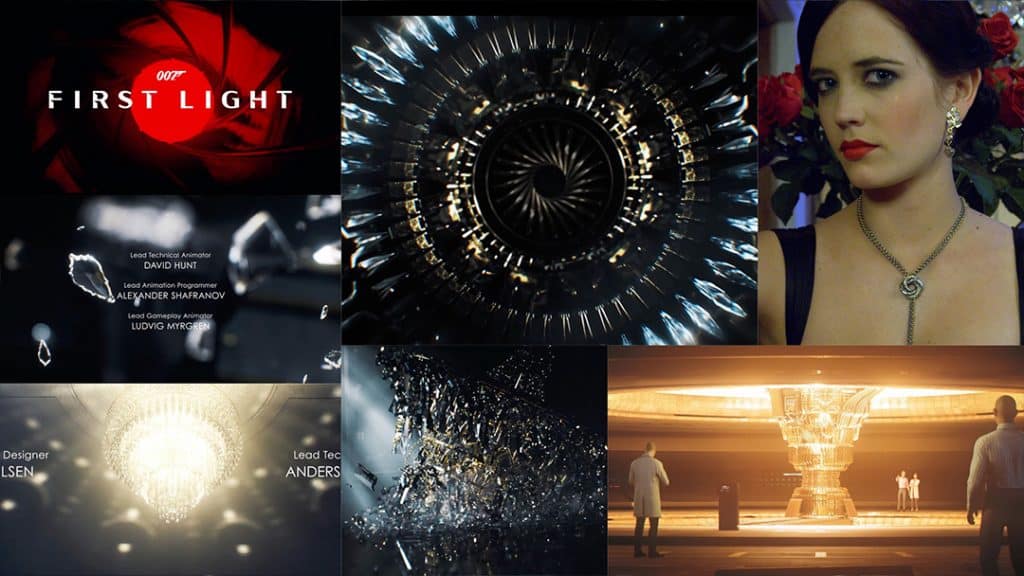
The shattered mirror fragments and chandelier pieces now form a kaleidoscopic tunnel that allows several interpretations at once. The entire visual theme surrounding this sequence must carry significant weight for the game’s story, as it spans roughly 48 seconds — nearly a third of the opening titles — suggesting a central narrative motif rather than a fleeting stylistic moment.
For one, it places the villain almost at the center of a crystalline gun barrel, where we would normally expect 007 himself to stand. That inversion could carry an additional layer of meaning: by positioning the villain in a space so strongly associated with Bond, the sequence might be hinting that he, too, was once considered for the 00 program — perhaps even for the 007 designation — but ultimately never became it.
If so, the image wouldn’t just frame him as an opponent, but as a kind of parallel path: someone who stood close to the same threshold as Bond, only to diverge at a crucial moment.
At the same time, the mask becomes part of a spiral structure that either intensifies the gun barrel imagery or evokes something else entirely.To me, there is at least some resemblance here to Vesper Lynd’s Algerian love knot necklace from the Craig era, a symbol of her tangled emotional life. Could the main antagonist also be acting out of love for someone or something?
Still, the more obvious explanation for this late-game visual may be the mysterious machine from the reveal trailer, whose conical structure is made up of multiple layered rings and which emits a striking, radiant glow — visually echoing the chandelier’s light-based motif. In fact, it strongly suggests that we may be looking directly into the very center of this ring-structured device — potentially the point where all elements converge. This, in turn, raises the narrative implication that the villain may be responsible for creating or deploying the machine.
The opening sequence lingers on the chandelier, its crystals, and the way light refracts through them — suggesting how a single source can split into multiple directions. If the mysterious machine ties into this, the imagery may point to something more concrete involving crystals, refraction, and light — with the most classic Bond interpretation being a laser.
The chandelier hangs in a tall, baroque hall with elaborate stucco on the ceiling and eventually crashes downward, much like the chandelier Bond brings down in the Kensington level. The fact that it briefly shines so brightly before falling could suggest a moment of activation — or a failed start — hinting that the machine might be triggered at some point, or even sabotaged by Bond, leading to its destruction. So late in the sequence, the location around it may stand for the villain’s hideout.
The World Turned Upside Down
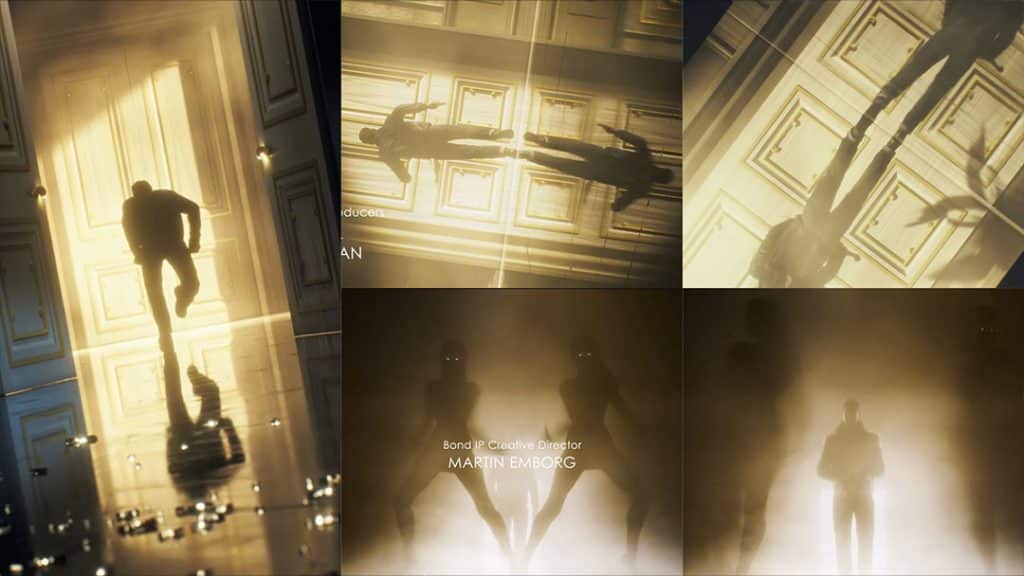
After the chandelier shatters, Bond moves away from the scene as if he is responsible for the destruction — or as if the destruction itself creates a threat from which he now has to flee.
At this moment, the lyric once again returns to the image of running toward the light like a moth to a flame. Then morning light breaks through windows and doors after the chandelier’s destruction. Could that represent the end of Bond’s mission and the dawn of the next phase of his adventure?
What makes the moment even more interesting is that the camera now rotates. What was below is suddenly above. Bond is also reflected in the floor, almost as if the experience has turned his world upside down — or as if he himself now carries traits that stand in opposition to his earlier self.
Equally striking is the fact that the mysterious and uncanny women survive the destruction of the chandelier. The first appears dancing ahead of Bond, before the second woman seems to emerge from her shadow. From that point on, both figures move in front of him, as if guiding his path forward.
They are no longer merely dancing in front of Bond. It almost feels as if they are now clearing a path for him — perhaps even a path they helped create. That, in turn, raises an interesting possibility: has Bond, knowingly or not, just solved a problem that ultimately serves their own agenda?
The Revolving Door
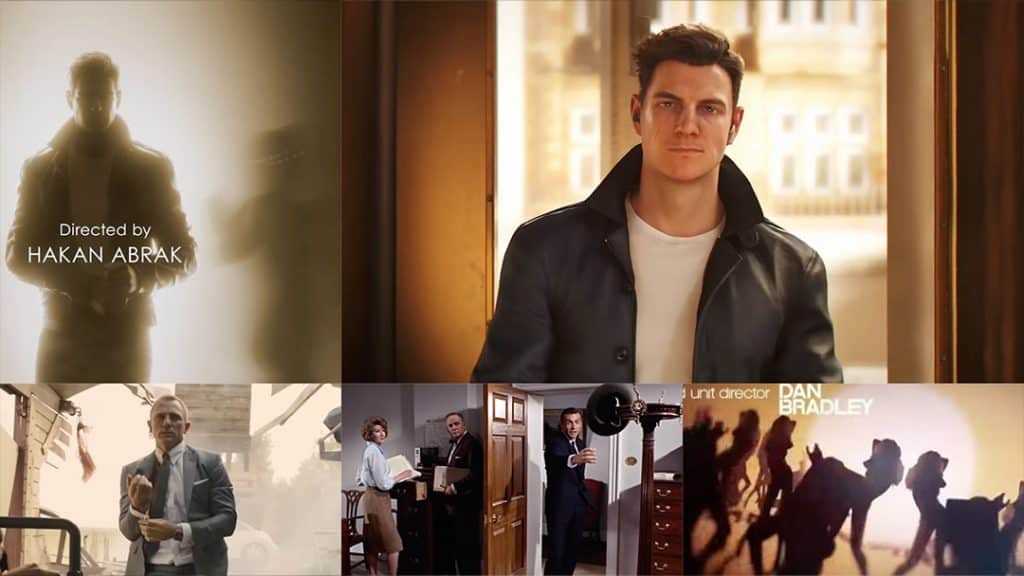
At the very end of the opening titles, we can see where the game likely continues immediately afterwards.
One of the two women pushes a revolving door forward with a subtle movement of her hand, and Bond walks through it. As he does, he casually adjusts his sleeves — almost as if brushing off dust — a gesture popularized by Daniel Craig in his portrayal of James Bond, perhaps hinting that this younger Bond has already begun to grow into that same effortless cool.
Interestingly, the rotating elements surrounding Bond in this moment — combined with the two women moving ahead of him — also evoke a subtle visual parallel to the opening titles of Quantum of Solace. There, silhouetted women circle around a glowing sun in a composition that strongly resembles a Zoetrop. The resemblance is not exact, but the shared sense of circular motion and choreographed figures creates a familiar visual rhythm — another quiet nod to the broader Bond visual language.
The door’s circular windows echo the iconic dot motif introduced by Maurice Binder, and its identity is grounded in the trailers: a nearly identical revolving door appears at MI6 in both the Story Trailer and the “Rules of Spycraft” trailer — strongly suggesting that gameplay continues immediately from this moment as Bond enters headquarters.
But the revolving door also works on multiple symbolic levels. It creates a narrative loop: the opening titles offer a stylized preview of the journey ahead, yet by the time they end, Bond stands right back at the beginning — before those very events unfold. In other words, the sequence moves forward through the story, only to return him to its starting point.
At the same time, its continuous motion suggests repetition: missions, routines, and patterns that may define Bond’s life as an agent — and potentially future entries in the series.
Taken even further, the moment could establish a new kind of tradition. Where earlier films often began Bond’s MI6 visits with a check-in at Moneypenny’s desk, 007 First Light may reframe that idea — with the act of stepping through this revolving door becoming the modern entry point into Bond’s world, ready to be revisited and reinterpreted in future adventures.
With just one month to go, hopefully this breakdown adds a bit more fuel to the anticipation.
I’d love to hear your take — what did you discover, and what do you see differently now? Drop it in the comments.