


007 First Light: Story Insights from Beyond the Light – Episode 3
st week, IO Interactive released the latest installment of its developer diary series, Beyond the Light – Episode 3, offering another glimpse into the narrative design of 007 First Light. During the episode and the live Q&A that followed, Main Writer Michael Vogt spoke about Bond’s characterization, the writing process behind the game’s story, and how storytelling changes when it moves from film-like scripts to an interactive spy adventure.
At the same time, the episode faced a somewhat difficult task. IO Interactive has clearly chosen to hold back major story details in order to avoid spoiling the experience for players ahead of release. As a result, many of the broader themes discussed in Episode 3 were already familiar to fans from earlier interviews or official IOI videos released over the past year.
For that reason, the most interesting takeaways are often smaller nuggets — details that may not radically change what we know about the game, but still help clarify how IO Interactive approaches Bond’s story and gameplay.
A Young Bond Discovering the World of Espionage
One observation that emerges from Vogt’s comments is how 007 First Light frames Bond’s entry into the world of espionage. Many seasoned action heroes eventually become numb to spectacle — after witnessing explosions and chaos countless times, those moments lose their impact.
A younger Bond, however, may still carry a certain curiosity and even a sense of excitement when confronted with the dramatic situations typical of spy stories. Vogt’s example appears less about literal inexperience and more about attitude: Bond has not yet developed the professional detachment that might come later in his career.
Of course, Bond is far from inexperienced in general. As a Lieutenant in the Royal Navy, he has already been exposed to dangerous situations and conflict. But the covert world of international espionage — with its secrecy, intrigue, and larger-than-life set pieces — is something entirely different.
That perspective may also help strengthen player identification. As Bond enters the world of espionage alongside the player, sharing that sense of curiosity and excitement could make this early version of the character easier to connect with.
Bluffing, Dialogue, and the Moment-to-Moment Gameplay
The young Bond’s personality is also reflected in one of the game’s central gameplay mechanics: the bluff system. By using Bond’s Instinct energy, players can talk their way out of tense situations or potentially open new paths through a mission.
According to IO Interactive, this kind of impulsive improvisation suits a young Bond particularly well. It stands in contrast to Agent 47 from the Hitman series, whose operations usually involve meticulous preparation.
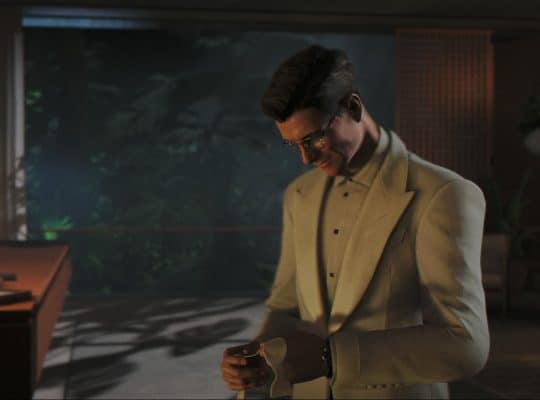
During the gameplay demo, Bond distracts a small group of NPCs at the Webb Industries gala with the line, “Ah, I heard you have a faulty coffee machine…”. In that moment, it was not entirely clear whether this line had been written specifically for that situation or whether it might be one of several bluff responses recorded by actor Patrick Gibson and selected randomly.
During the livestream Q&A, I had the opportunity to ask the developers about this detail. The answer was clear: these bluff lines are written and recorded specifically for the moments in which they appear.
This approach could also increase the replay value of 007 First Light. Players who initially prefer a more direct approach might be tempted to try a more diplomatic playstyle in later playthroughs — simply to hear more of Bond’s bluffs instead of letting their fists do the talking.
Writing a Bond Story for an Interactive Medium
Vogt also offered insight into how the story of 007 First Light is developed. Early in pre-production, the narrative often exists as a script that looks very much like a film screenplay. As development progresses, however, that script is gradually reshaped to fit the structure of an interactive game.
The Main Writer emphasized that the team places particular importance on keeping the first half of the second act dynamic, ensuring that the narrative momentum of the campaign is maintained as the story unfolds.
From my perspective, this phase of a story can often be challenging in longer video games. Titles aiming for around 20–30 hours of playtime sometimes use the early second act to expand the world, move the player between locations, gather information, or set up the larger turning points of the plot. While these segments can add depth and context, they occasionally risk slowing the pacing before the story accelerates again toward its climax.
To address this, Vogt described the writing process as relying on two different “toolboxes.” One involves the traditional elements of storytelling — shaping the plot and developing the characters. The other focuses on translating that story into an interactive experience, which requires far more structural work. At that stage, collaboration with level designers becomes essential, since they shape the moment-to-moment gameplay that ultimately delivers story beats to the player.
Interestingly, Vogt compared storytelling in a game like 007 First Light less to writing a film and more to structuring a television series. In both cases, it is the characters who sustain the audience’s engagement, with their development and interactions carrying the narrative across a much longer arc.
Characters, MI6, and Bond’s Influence on the World
The game’s supporting characters are another important part of that storytelling approach. Because players spend far more time with Bond over the course of a game than audiences typically spend with a character in a two-hour film, the surrounding cast naturally takes on a bigger role. These NPCs help reflect different facets of Bond’s journey, add texture to the world around him, and carry smaller story threads that keep the narrative moving across a much longer runtime. And since this Bond is still at the beginning of his career, those encounters may also play a more direct role in shaping the man he will eventually become.
At the same time, Bond himself will shape the world around him. Vogt mentioned MI6 as an example: Bond’s willingness to take risks could influence an intelligence service that might increasingly rely on data analysis and remote surveillance rather than dangerous field operations.
If that reading holds true, it could also suggest that the last generation of active 00 agents may have been the one associated with Greenway. Bond’s arrival would then mark the moment a new operative enters a service that may already have begun shifting its priorities.
Why It’s Called 007 First Light
Finally, Vogt briefly addressed the origin of the game’s title. Several options were apparently considered before the team ultimately settled on 007 First Light.
According to him, the name simply feels like a classic Bond title, but it also carries a metaphorical meaning. Rather than referring to a specific operation, object, or location within the story, the title reflects the beginning of Bond’s journey — the moment a young agent first steps into the world that will eventually define him.
Inspiration From the Bond Films
During the Q&A, I also asked which elements of the Bond film series had served as particular inspiration for 007 First Light. The question seemed particularly relevant because the developers have repeatedly emphasized that Ian Fleming’s original novels play a major role in shaping the game’s tone and interpretation of Bond.
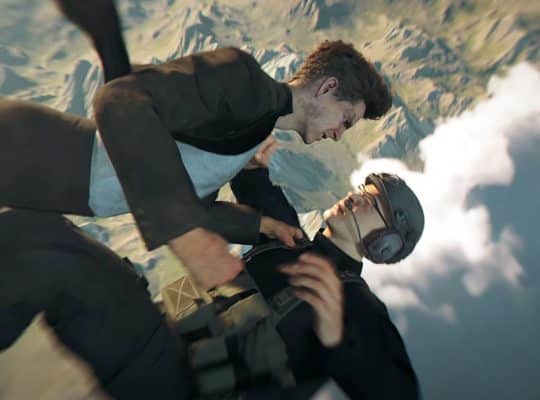
Vogt explained that the team often looked to smaller moments across the films rather than trying to replicate entire storylines. Sometimes that inspiration comes in the form of larger set pieces — possibly including moments like the dramatic aerial fall seen in the Slovakia mission, which echoes elements of Moonraker. In other cases, it can be details such as gadgets, villain traits, or memorable character moments drawn from different eras of the franchise.
When discussing influences more broadly, Vogt also mentioned that his favorite Bond film is Casino Royale. He noted that this film — together with Brian De Palma’s Mission: Impossible — had already influenced IO Interactive during the development of the Hitman World of Assassination trilogy, with the Italian level Sapienza even conceived as a homage to classic Bond settings.
What’s Next: Music and the Title Sequence
The Beyond the Light series is set to continue tomorrow. IO Interactive has announced that the next episode will focus on the music and sound design of 007 First Light. The installment will feature the British composer duo The Flight, who are responsible for the game’s score.
Following the discussion, the developers also plan to reveal the official title sequence of 007 First Light, including the title song “First Light”, written and composed by Lana Del Rey and David Arnold.
For viewers who prefer to avoid spoilers, IO Interactive has already promised a disclaimer before the title sequence begins, giving fans the opportunity to leave the stream or minimize it before the reveal.





1 Comment