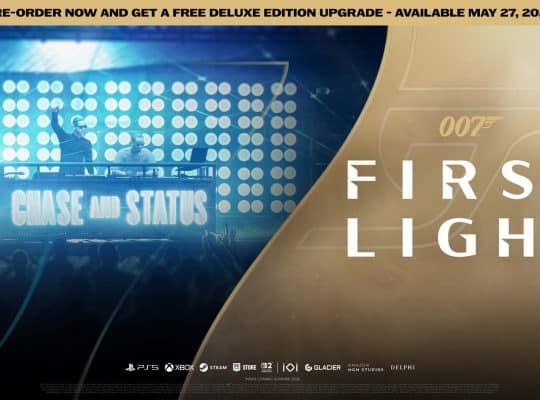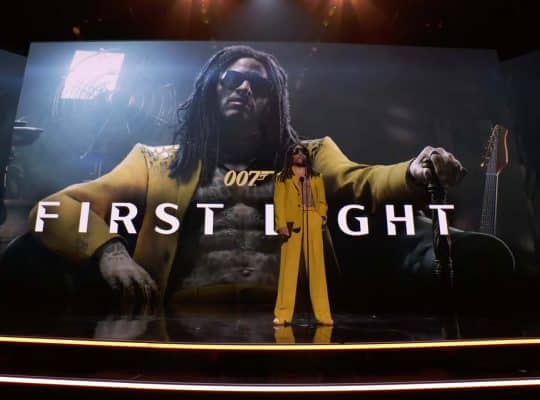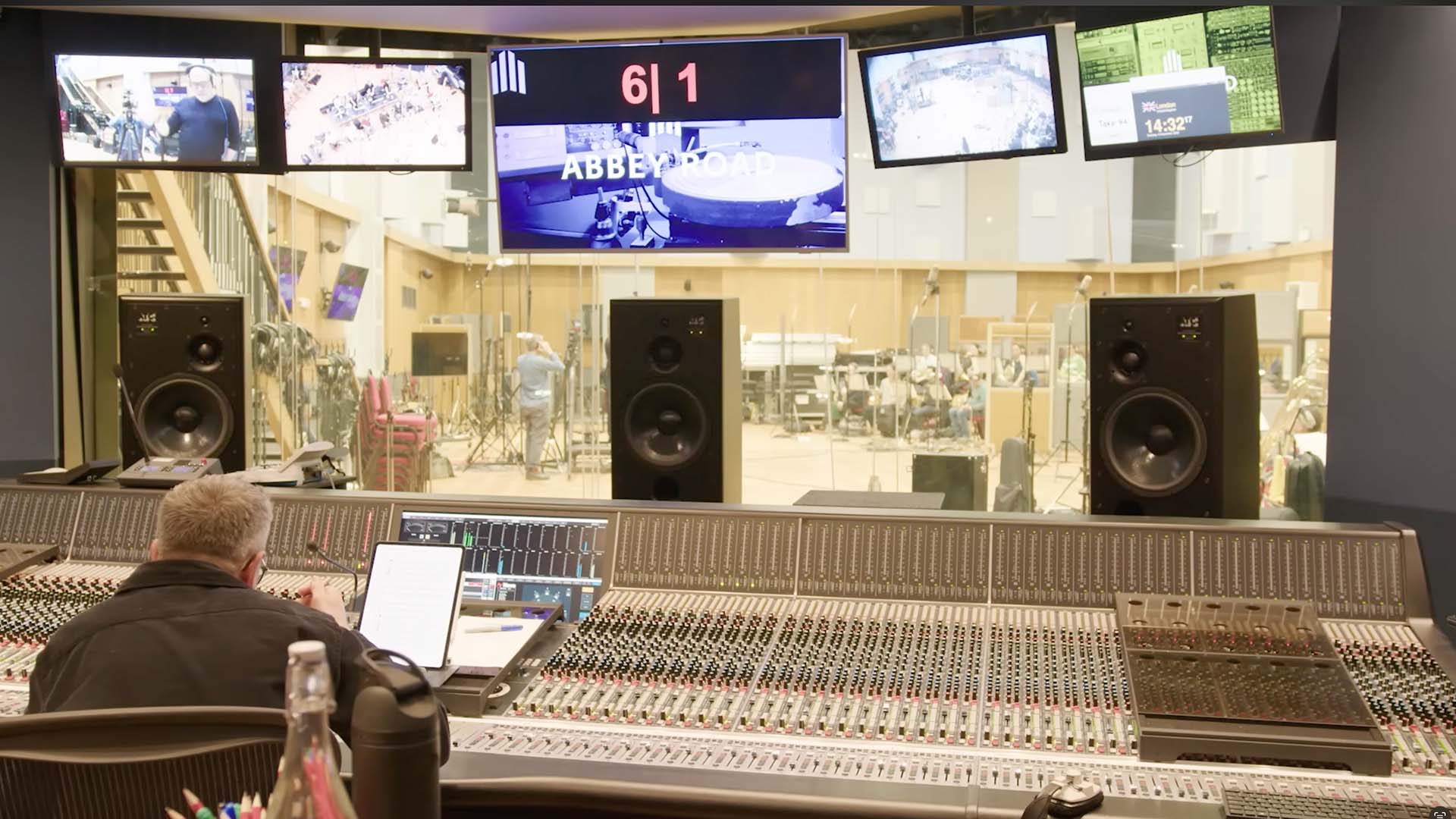
April has clearly been all about Bond music. From the announcements around Dimitri Vegas and Chase & Status to the reveal of the title track First Light and the full opening titles — it’s been a month packed with musical highlights for 007 First Light. Right in the middle of it all: Episode 4 of the Beyond the Light developer diary.
Episode 4 could turn out to be the strongest installment in the series so far — not just because it showcases the soundtrack, but because it reveals how deeply music is tied to gameplay and character progression.
We get substantial new insights from IO Interactive, hear directly from The Flight for the first time, and see extensive behind-the-scenes footage — from sound recordings on location to music sessions inside the legendary Abbey Road Studios.
The episode doesn’t just talk about the soundtrack — it lets it speak for itself. Alongside updated takes on classic Bond cues, there are also entirely new compositions by The Flight, offering an early sense of what the 007 First Light soundtrack is aiming for.
Handcrafted for Bond Fans and Audiophiles
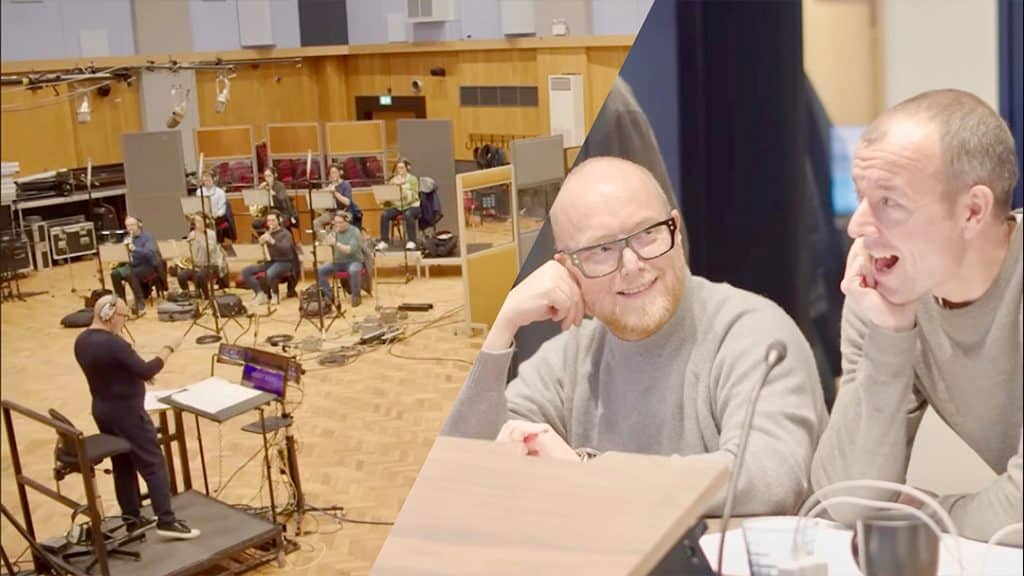
One thing becomes clear very quickly: this soundtrack is built with a strong focus on real instrumentation and live performance.
Instead of leaning heavily on synthetic sounds, the music is recorded with musicians in a studio environment — giving it a more natural, film-like quality.
Audio & Mission Director Dominic Vega explains:
“…if you’re an audiophile and if you are just a lover of the Bond music – that’s something for you. It’s for people out there that can recognize and appreciate that little extra care that goes into crafting the sound. We want the sound of the game to be very handcrafted. We don’t want it to feel artificial, we don’t want it to feel hyperprocessed. We want it to feel like ‘I am playing a film.’”
That philosophy is also reflected in how The Flight approach their work. As live musicians, many early ideas are explored directly — often on guitar — before being developed further, orchestrated, and recorded with a full orchestra at Abbey Road Studios.
Many of the musicians involved in these sessions have previously worked on Bond films or games, adding another layer of continuity and authenticity to the soundtrack.
For the duo, working on a Bond project — and recording in such an iconic location — is a clear honour.
At the same time, they are aware of the legacy they are stepping into. Many earlier Bond soundtracks were shaped by the musical trends of their time — defining their era, but also tying them to it.
For The Flight, the goal is slightly different: creating a sound that holds up over time — modern today, without feeling dated tomorrow. It’s about finding a balance between identity and longevity, allowing the score to sit alongside classic Bond music without being locked into a specific era. Joe Henson puts it this way:
“Our main thing was it make it sound like us but without make it lose the core, which is the sound of the 007 franchise.”
Alexis Smith sums it up simply:
“Modern, timeless.”
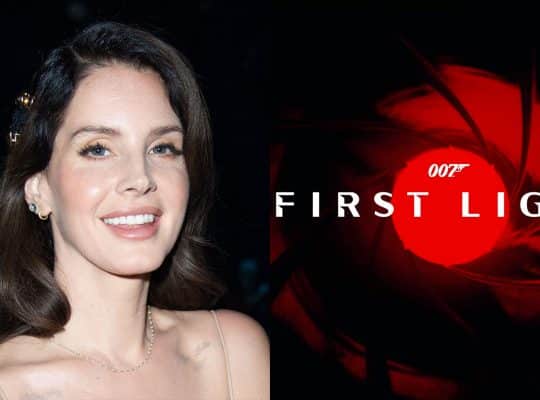
This focus on authenticity also extends to the game’s title song. David Arnold and Lana Del Rey co-wrote and composed the track, with Arnold once again linking 007 First Light to the franchise’s musical legacy through his work on films like Casino Royale and Quantum of Solace.
The recording of the title track was conducted by Nicholas Dodd, a long-time collaborator of Arnold who has conducted and orchestrated several Bond scores. His involvement further strengthens that connection to the franchise’s musical heritage.
Earn the Classics
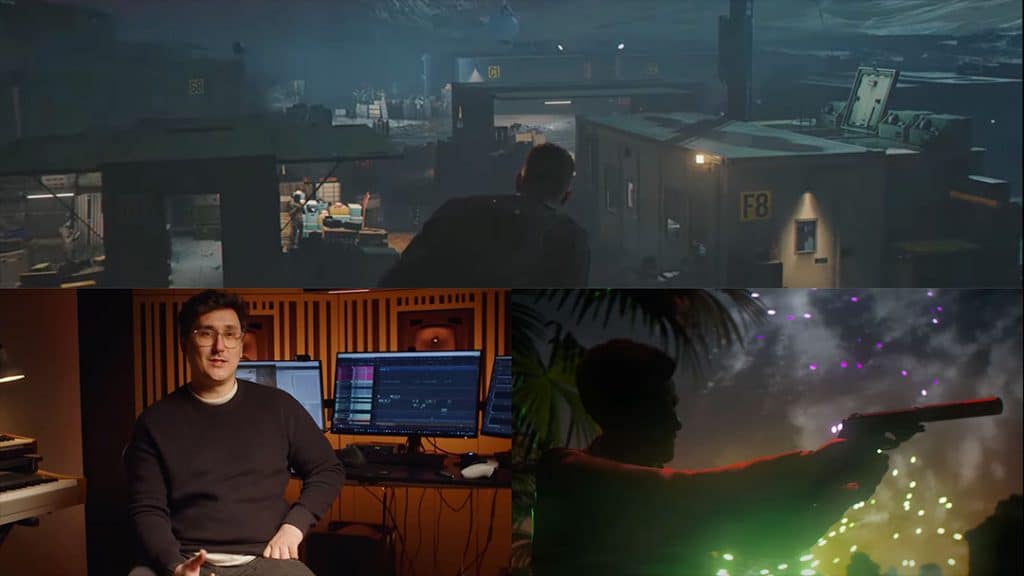
Another key idea behind the 007 First Light soundtrack is how the game handles classic Bond themes.
We had already heard about this concept last summer — the idea, introduced by Dominic Vega (see above), that Bond would have to “earn” the iconic themes over time. What’s new here is how consistently it is implemented as part of the gameplay experience.
Instead of starting with familiar music, the game begins with a more restrained sound that gradually shifts toward the classic Bond style as Bond progresses. At the same time, these themes are not simply unlocked in their original form — they evolve within the context of each mission.
Alexis Smith adds:
“In the opening of the game where he’s not actually 007 yet has a completely different feel to much later in the game, where he’s actually… done a few missions by this point.”
It also makes us wonder what this younger Bond might actually sound like at the beginning of the game. Likely less symphonic, a bit more raw — perhaps even leaning into the electronic elements that The Flight have explored in earlier scores. If so, the contrast to the more familiar Bond sound later on could be even more noticeable.
The developer diary offers a glimpse of this approach with a reworked version of the On Her Majesty’s Secret Service theme, where additional brass layers are used to build tension and give the piece a different emotional weight.
The result is a system where progression and context merge — allowing players to not only follow Bond’s journey, but to hear, almost in real time, how he grows into 007.
Missions as Musical Albums
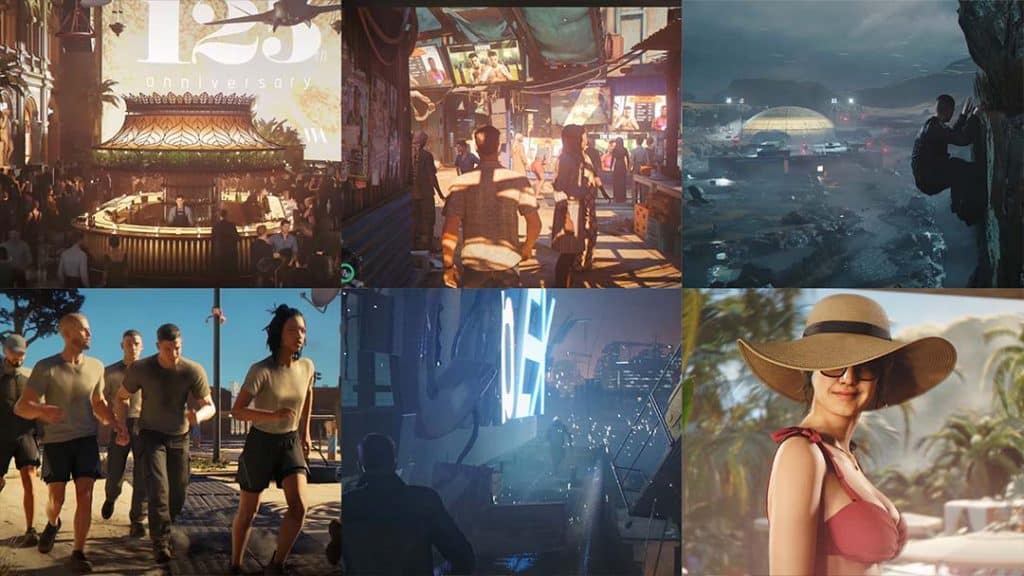
One detail helps explain why music and gameplay feel so closely connected: Dominic Vega oversees both missions and audio direction. That overlap allows both elements to be designed together from the ground up.
Each mission is structured to feel like its own musical album, with a distinct theme, tone, and a clear high point. As Bond moves through a level, additional layers of music are introduced — sometimes emerging from the environment, sometimes from the score itself.
The world itself shapes the sound. Snippets of local languages spoken by NPCs become part of the audio texture, while the presence of allies or enemies can influence the music through their associated motifs.
This is also where reworked classics come into play. Rather than appearing in a fixed form, familiar Bond melodies shift depending on the mission — influenced by location, atmosphere, and characters. In my point of view a useful comparison might be Los Muertos Vivos Están from Spectre, where classic Bond elements are blended with a more playful, almost sneaky groove shaped by Mexican festival rhythms and layered percussion.
More importantly, this highlights how closely the music is tied to the moment itself. Rather than simply accompanying the action, it is used to shape how a scene is perceived — accentuating tone, pace, and character.
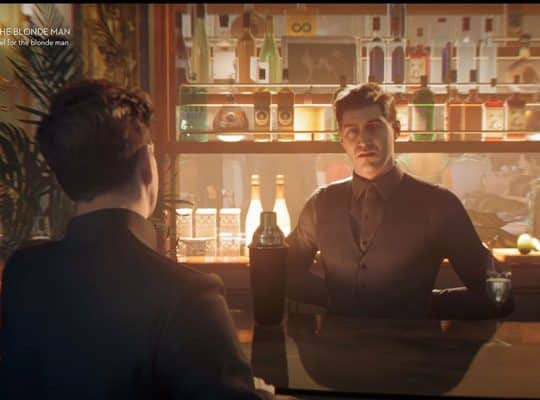
This becomes especially clear in how the game uses so-called “needle drops.” One example shown in the developer diary features Bond entering the gala in Kensington: as the camera slowly sweeps across the scene, a smooth, elegant new track fades in, giving the moment a distinct sense of style and confidence — a musical swagger that immediately sets the tone.
A similar moment can be observed when Bond steps out onto the balcony at the Grand Carpathian and overlooks the chess tournament for the first time. Here too, the music subtly shifts to underline the scale and atmosphere of the scene, reinforcing how these transitions are used to guide the player’s perception rather than simply accompany the action.
Sound Design: Grounded in Reality
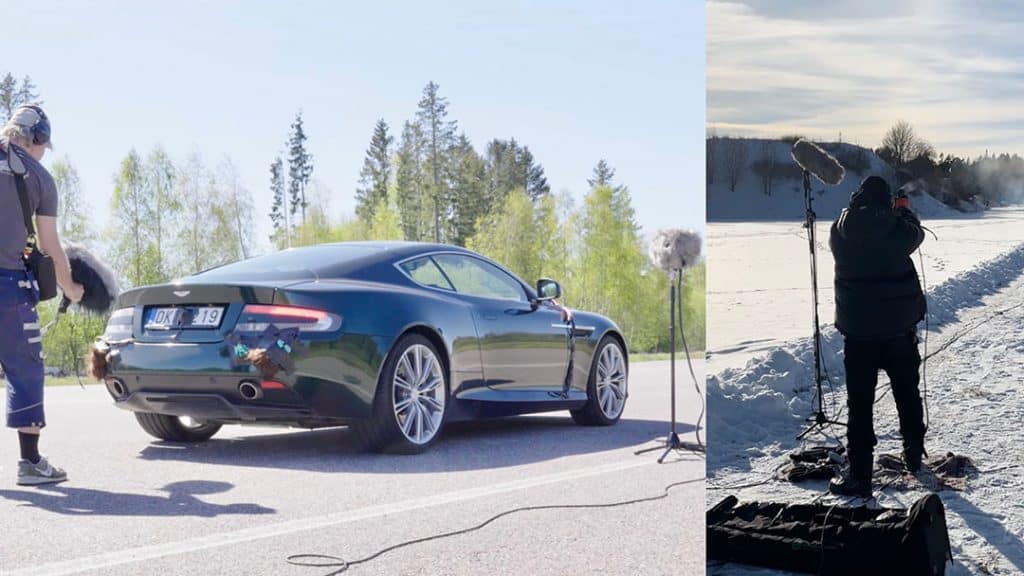
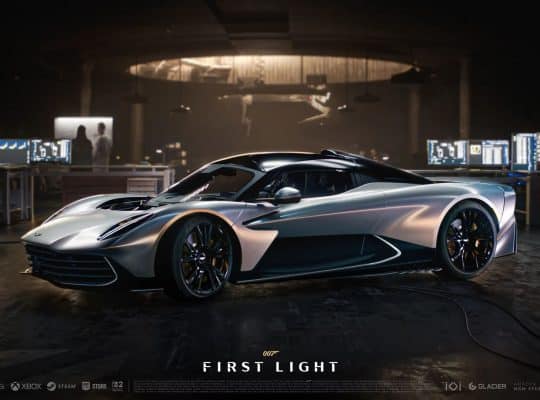
At the same time, IO Interactive places strong emphasis on authentic sound recording. The developer diary offers a glimpse into this process, showing selected examples — including the Aston Martin DBS recorded on an airfield near Stockholm, the same model known from Casino Royale and Quantum of Solace, and recently featured again in the story trailer.
The footage also highlights weapon recordings in snowy environments, where acoustics behave differently. These are just a few examples shown in the video, but they underline the level of detail IO Interactive is aiming for.
At the same time, the game’s gadget sounds follow a slightly different approach. Many of them are built as a blend of synthesizer elements and real-world recordings. This fits particularly well, as many gadgets take the form of small, everyday objects.
One of the sound designers involved has a particular interest in older cameras and technical devices, which also influence the sound palette — giving the gadgets a more distinct and grounded character.
A Soundtrack Worth Preserving
Given the strong focus on craftsmanship throughout Episode 4, one question naturally comes up: will the 007 First Light soundtrack be available beyond the game itself?
Bond scores have a long tradition of being released as physical albums — allowing fans to revisit the music independently. With 007 First Light, there’s a strong case for giving The Flight’s work the same treatment.
We have reached out to IO Interactive’s PR team regarding a potential physical release, but have not yet received a response.
For now, it remains an open question — and one many Bond fans are likely already hoping for.